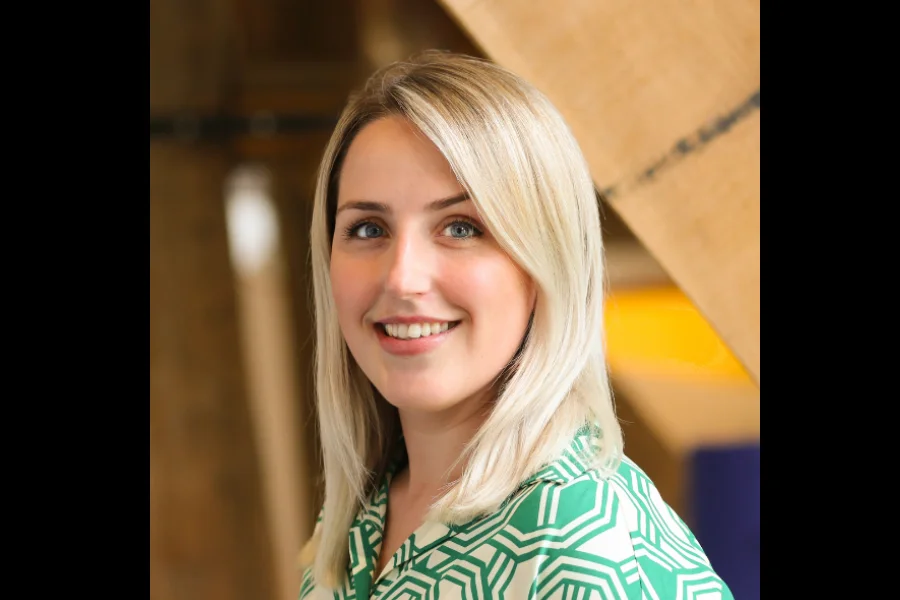
Some people change the world from a stage. Others do it from a living room. Rebecca Dunn belongs to the second group. She is not a politician. She has never run for office. She has never hosted her own television show or built a social media following. Through much of her adult life she has worked without fanfare, sitting on boards, backing ideas she believed in, and cultivating relationships with people she felt had something genuine to contribute to the country.
Then in September 2025, she walked onto a stage in front of nearly 70,000 people at State Farm Stadium in Glendale, Arizona.
The occasion was the memorial service for Charlie Kirk, the conservative activist and founder of Turning Point USA, who had been killed earlier that month. Rebecca was not there as a celebrity or a political figure. She was there because years before Kirk was a household name, before Turning Point USA had a single full-time employee, before anyone outside of Florida had heard of him, she and her husband had sat with him in their home and decided to take a chance on his idea.
She spoke that day about what that bet had meant. She said Kirk had felt like a son to her. She talked about the strange reversal of circumstances: Kirk had been scheduled to speak at her husband Bill’s memorial, and instead here she was, speaking at his.
That moment put her name in front of a national audience for the first time. But her story had been building for decades before anyone was watching.
Quick Facts
| Detail | Information |
|---|---|
| Full Name | Rebecca Walter Dunn |
| Nationality | American |
| Ethnicity | White American |
| Religion | Christian |
| Education | Florida State University (undergraduate); University of Kentucky (MSW); Hofstra School of Law (J.D.) |
| Occupation | Philanthropist, Attorney, Civic Activist |
| Husband | William A. “Bill” Dunn (married 2002, died March 31, 2025) |
| Daughters | Elizabeth Suzanne Dunn, Chris Ellen Dunn-Valencia |
| Foundation | The Dunn Foundation (formerly Dunn’s Foundation for the Advancement of Right Thinking) |
| Board Roles | Cato Institute, James Madison Institute (18 years), FIRE |
| Notable Civic Boards | H. Lee Moffitt Cancer Center Foundation, Tampa Bay Performing Arts Center, WEDU, Palm Beach Symphony, American Friends of the Uffizi Museum |
| Foundation Assets | Approximately $87 million (as of 2018 filings) |
| Estimated Net Worth | $50 million to $100 million (combined with foundation assets) |
| Current Location | Tampa, Florida |
Growing Up: A Foundation Built on Service
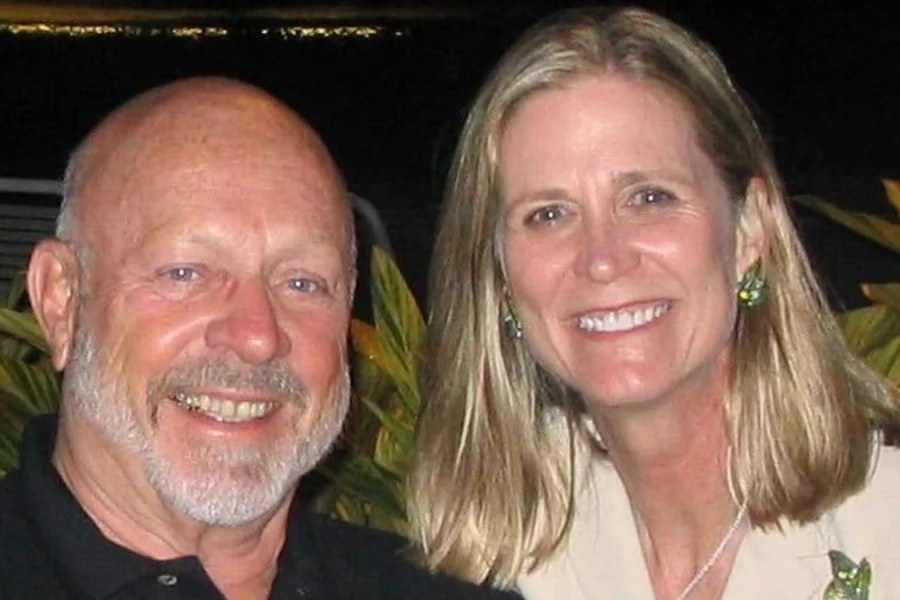
Rebecca Walter Dunn grew up in an environment where community responsibility was taken seriously.
The exact details of her childhood have never been made fully public. She has not given lengthy interviews about her early years. What comes through clearly from everything she has said and done as an adult is that her upbringing instilled in her a particular understanding of what individuals owe to the communities around them.
She was raised with a strong emphasis on showing up. On volunteering. On paying attention to how systems work and what happens to people when systems fail them.
These were not abstract values for her. They shaped the specific paths she chose. She did not drift into social work and law and civic activism. She walked toward them deliberately, starting from a set of convictions that seem to have been in place quite early.
Florida became her home state and the center of her civic life. Tampa Bay in particular became the community she focused on for decades. She built her reputation there not by seeking attention but by showing up consistently over time. She was the person who kept showing up.
Education: Three Degrees, Three Directions
Rebecca’s academic path reflects someone who kept asking more of herself.
She began at Florida State University, one of Florida’s flagship public universities. She completed her undergraduate degree there and began developing the civic instincts that would define her later career.
She then went further. She enrolled at the University of Kentucky and earned a Master of Social Work degree. That credential pointed her toward direct service work. It meant she was trained not just in theory but in the practical work of helping families navigate difficult situations. Social workers see things that most professionals never see. They deal with the human consequences of policy decisions, economic pressures, and system failures at the most personal level.
She did not stop there either.
She went on to earn a Juris Doctor from Hofstra School of Law. Three advanced credentials across three different institutions. Each one opened a different door. The social work degree pointed toward community service. The law degree pointed toward the justice system. The combination of the two gave her an unusual perspective on how law and human welfare intersect.
That intersection would shape much of what she did next.
Career: From Social Work to Prosecution to Policy
Rebecca started her working life in social work.
She worked directly with families and communities. She saw what it looked like when people lacked access to resources, legal protection, or economic stability. This was not background research. It was front-line work.
She then transitioned into law. She became a state prosecutor. That role required her to handle serious justice-related cases. Prosecutors occupy a particular position in the legal system. They do not simply represent one client. They are supposed to represent the public interest. For someone who had spent years in social work thinking about how systems affect people, the prosecutor’s office was a natural extension of that concern.
Later she moved into legal work with the United States Navy, serving as an attorney in a military legal capacity. The specifics of that role have not been detailed publicly, but the transition from state prosecution to federal military law represents a continued commitment to public service through legal expertise.
Alongside all of this, and in some ways more defining than any single job title, Rebecca was building something else.
She was becoming one of the most quietly influential civic actors in Florida.
Building Influence Through Boards and Forums
Rebecca’s entry into the world of public policy did not come through elections or appointments at the start. It came through community organizing in the most literal sense.
She began hosting forums in the Tampa Bay area. These were events designed to bring residents into conversation about state and national policy questions. The forums gave ordinary people a place to engage with ideas that would otherwise feel distant or abstract. This kind of work is unglamorous. It requires logistics, relationships, and a willingness to show up repeatedly for modest audiences.
She did it anyway.
Her reputation from that work opened doors to formal institutional roles. She joined the board of the James Madison Institute, a Florida-based think tank focused on free-market approaches to public policy. She stayed on that board for eighteen years. That is an exceptional length of service and reflects both her commitment and her value to the organization.
She also joined the board of directors of the Foundation for Individual Rights in Education, widely known as FIRE. That organization focuses on protecting free speech and civil liberties on university campuses. It takes on cases involving students and faculty who face punishment for protected expression. Rebecca’s involvement placed her at the intersection of education, law, and civil liberties.
She received an appointment to the Florida Judicial Nominating Commission in 2001. That body plays a role in identifying and recommending candidates for judicial appointments in Florida. Sitting on that commission meant Rebecca had real influence over the composition of the state’s courts. This was not an honorary position. It was a substantive one.
She was also supporting the Cato Institute during this period, beginning to attend their events as a donor in 1997. The Cato Institute is one of the most influential libertarian think tanks in the United States. It focuses on issues including Social Security reform, civil liberties, immigration, and reducing the scale of government intervention. Rebecca was drawn to their work on reaching young people with these ideas.
In 2017, she was formally invited to join the Cato Institute’s board of directors. Her statement at the time described Cato as the essential reference point for libertarian thought across multiple audiences, from students to lawmakers to journalists. The Cato board named her as a vital contributor to promoting a free society.
Her civic board involvement extended well beyond policy institutions. She served on the boards of the H. Lee Moffitt Cancer Center Foundation, supporting cancer research and patient care. She participated in the University of South Florida Economic Advisory Board. She contributed to the Tampa Bay Performing Arts Center, WEDU Public Broadcasting, the Community Foundation for Palm Beach and Martin Counties, the Palm Beach Symphony, and the American Friends of the Uffizi Museum in Florence, Italy.
That last one says something about the breadth of her interests. The Uffizi is one of the most important art museums in the world. Supporting American access to that institution reflects an engagement with culture and global heritage that sits alongside her policy work without contradiction.
Meeting Bill Dunn: A Partnership Built on Shared Ideas
Bill Dunn was not just Rebecca’s husband. He was her partner in every true sense of the term.
William A. Dunn had founded DUNN Capital Management in 1974. He was a pioneer in using computer-driven quantitative models for futures trading. At its peak, the firm managed over a billion dollars in assets. He was also a committed libertarian. He served as chairman of the Reason Foundation, the organization behind the Reason magazine that has long been a flagship publication of libertarian thought in America.
Bill established the Dunn Foundation in the early 1990s, originally called Dunn’s Foundation for the Advancement of Right Thinking. The name was changed to simply The Dunn Foundation in 2016. The mission was clear: fund organizations working to advance classical liberal principles. Individual liberty, limited government, and free enterprise were the organizing ideas.
Rebecca and Bill crossed paths through their shared passion for these ideas. Their connection grew into a relationship, and they married in 2002. Together they became something more powerful than either would have been alone. Bill brought financial resources and institutional credibility from decades in investment management. Rebecca brought civic networks, legal expertise, and decades of hands-on community work in Florida.
They also established the Dunn Libertarian Leadership Project at the Cato Institute together. This initiative specifically targeted cultivating the next generation of leaders committed to libertarian principles.
Their union produced two daughters: Elizabeth Suzanne Dunn and Chris Ellen Dunn-Valencia.
Bill Dunn died on March 31, 2025, at the age of 90.
The Charlie Kirk Chapter: A Bet That Changed History
Around 2012, a teenage Charlie Kirk walked into Rebecca and Bill Dunn’s Florida living room.
Kirk was nineteen or twenty years old at the time. He had an idea. He wanted to build a national organization that would bring conservative and free-market ideas to university campuses across America. He called it Turning Point USA. He had a plan, an impressive pitch, and almost no money.
He told the Dunns he thought it would take roughly $50,000 to get the organization started properly.
Bill and Rebecca made him a challenge. Raise $25,000 yourself, and we will match it. Kirk went out and raised his half. When he came back, the Dunns honored their word. That $25,000 matching gift gave Turning Point USA its first real funding.
It did not stop there. The Dunns became consistent supporters, providing what Rebecca later described as repeated challenge grants that grew larger over time. The money paid for office space, staff salaries, and the infrastructure needed to build campus chapters across Florida first, then nationally.
By 2023, the Dunn Foundation had given one million dollars to Turning Point USA in a single year. The organization that had started with a teenager in a living room had grown into one of the most active youth conservative organizations in the country.
Kirk went on to build a media empire, host a major radio show and podcast, and become one of the most prominent figures in the American right. He remained personally close to Rebecca and Bill throughout that growth. He was, she said, supposed to speak at Bill’s memorial when Bill died in March 2025.
That did not happen as planned.
A Moment on the National Stage: Kirk’s Memorial, September 2025
Charlie Kirk was killed in September 2025.
The memorial service was held on September 21 at State Farm Stadium in Glendale, Arizona. Nearly 70,000 people attended. Among those present were major political figures including Donald Trump.
Rebecca Dunn walked onto that stage.
She spoke about their first meeting. She described the strange and painful reversal she was experiencing. She had expected to hear Kirk’s voice at her husband’s memorial just months earlier. Instead, she was the one saying goodbye to him.
She called him a true freedom fighter. She described how she had believed in him from the very beginning, when believing in him required real risk and no obvious reward.
The speech drew enormous attention. For many people watching, it was the first time they had heard Rebecca Dunn’s name. For those who work in libertarian and conservative policy circles in Florida, she had been a known and respected figure for more than two decades. The contrast between her profile before that day and after it was striking.
Outlets including The Economic Times and Fox Business ran profiles of her afterward. Her name trended on social media. The memorial had made visible something that had previously operated almost entirely out of public view.
Struggles and Losses: A Year of Grief
The year 2025 brought Rebecca profound personal loss.
Bill died at the end of March. He was 90 years old and had lived a long and purposeful life. But losing a spouse who was also your closest intellectual and philanthropic partner leaves a particular kind of gap.
Rebecca did not have time to process that grief privately before Kirk’s death arrived in September, less than six months later.
Kirk had been part of their lives for more than a decade. He had been to their home. He was supposed to be at Bill’s memorial. His sudden violent death added another layer of loss to what was already a difficult year.
She handled both publicly with remarkable composure. The speech she gave at Kirk’s memorial was emotional but grounded. She did not collapse into sentiment. She spoke with the clarity of someone who had been through enough to know how to hold grief and purpose at the same time.
She has also navigated questions that inevitably follow major philanthropic activity. The Dunn Foundation’s right-leaning grantees have drawn criticism from progressive commentators. Some journalists have raised questions about grants to organizations connected to climate skepticism. Rebecca has consistently responded to such questions by emphasizing transparency and staying focused on the foundation’s stated mission.
She does not appear to spend energy on critics. She spends it on the work.
Money: What the Dunn Foundation Actually Represents
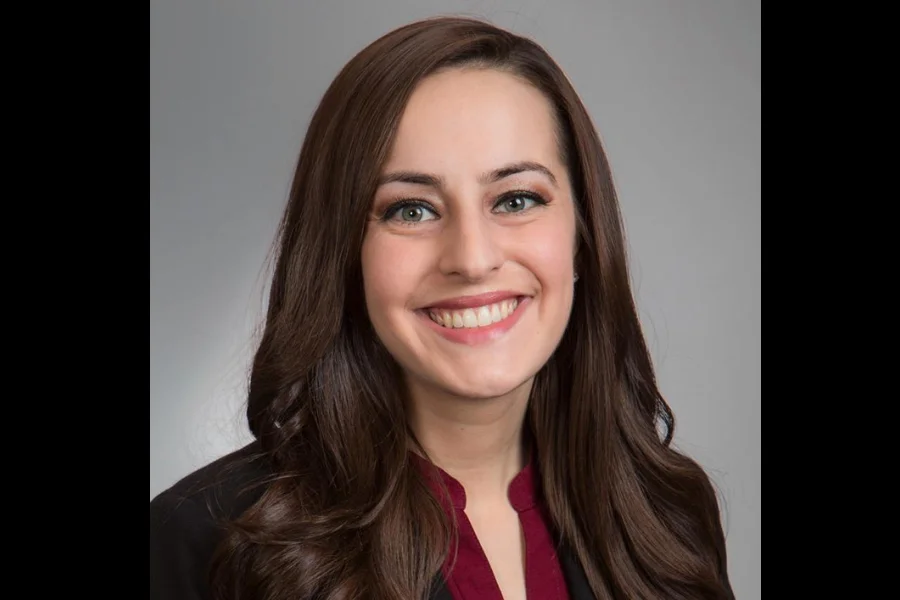
Rebecca Dunn’s personal net worth is not publicly documented in the way a corporate executive’s might be.
What is documented is the Dunn Foundation’s asset base. Public tax filings show that as of 2018, the foundation held approximately $87.9 million in assets. The foundation is funded through the Dunn family’s financial resources and the returns on foundation assets. Bill Dunn’s DUNN Capital Management at its height managed over one billion dollars for clients. The personal wealth accumulated from that firm forms the underlying resource base.
After Bill’s death in 2025, Rebecca took over primary responsibility for the foundation. She and fellow trustee David Dreyer, who serves as general counsel at DUNN Capital Management, manage the foundation’s ongoing operations. Rebecca receives $40,000 annually as trustee compensation.
Estimates of Rebecca’s personal net worth range from $50 million to $100 million when foundation assets and family wealth are considered together. These figures vary depending on how foundation assets are attributed. The foundation holds resources that are legally separate from personal wealth, but practically, the Dunns built and funded it together.
In 2016, she and Bill bought a home in Palm Beach, Florida. They sold that property in 2018 for $11.3 million and relocated to simpler accommodations in Florida. As of 2026, she lives in Tampa.
Her financial posture has never been about display. The Palm Beach mansion story is notable precisely because she sold it and moved somewhere smaller. The money has always been pointed outward, toward causes, not inward toward lifestyle.
What She Is Doing Right Now in 2026
As of 2026 Rebecca Walter Dunn is actively running the Dunn Foundation.
She has taken on the full weight of foundation leadership following Bill’s death. The foundation continues to make grants to organizations aligned with its founding mission. These include the Cato Institute, the James Madison Institute, FIRE, and various other libertarian and conservative educational organizations.
She continues to serve on the Cato Institute board, a role she took up in 2017. She remains connected to the civic institutions she has supported for decades across the Tampa Bay and Palm Beach regions.
She has stepped into a more visible public role than she previously occupied. The Kirk memorial speech was not simply a eulogy. It was also a statement of continued presence and purpose. She made clear that her investment in the ideas Kirk represented was not contingent on his survival.
She lives in Tampa. She maintains a private personal life. She has no public social media accounts. She gives no ongoing interviews. She lets her actions speak for her, which has been her consistent approach for forty years.
She is 2025’s version of what she has always been: someone who shows up, does the work, and moves on to the next task.
Why Rebecca Dunn’s Story Matters
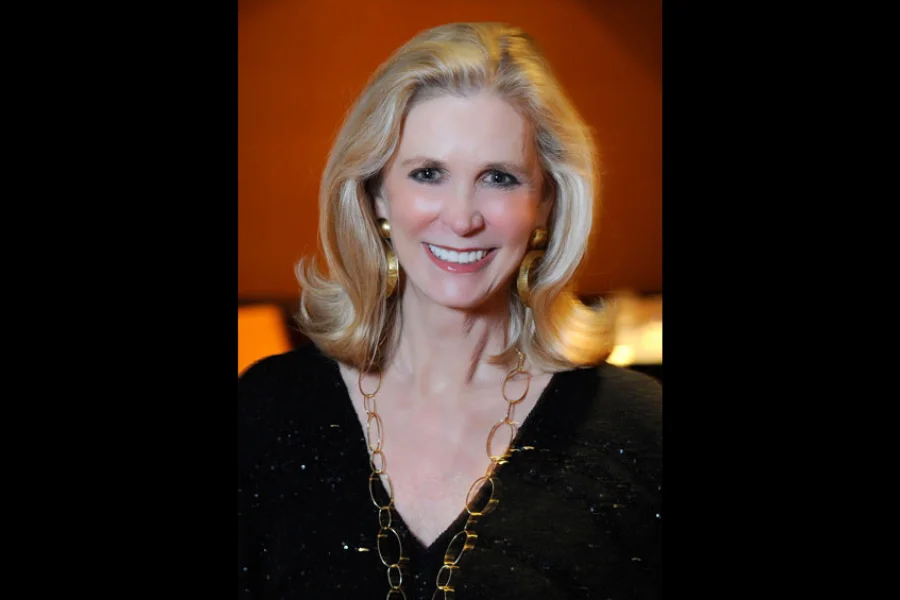
Here is the honest summary.
Rebecca Dunn is not famous. She did not want to be. For most of her career she operated entirely below the threshold of public attention. She built relationships, served on boards, hosted forums, funded ideas, and went home.
But the decisions she made in relative obscurity had consequences that showed up in very visible places.
Turning Point USA exists in its current form in part because she and her husband took a chance on a teenager with a vision. The Cato Institute’s work reaches millions of readers and policymakers in part because she supported it and joined its board. Florida’s judicial landscape was shaped in part by her work on the nominating commission.
None of that came from seeking attention. All of it came from showing up repeatedly in rooms where decisions were being made and contributing her resources, her expertise, and her time.
The September 2025 memorial was simply the moment when the rest of the world caught up to what people in Florida policy circles had known for twenty years.
Also read: Rebecca Olson Gupta
FAQs
1. Who is Rebecca Walter Dunn?
Rebecca Walter Dunn is an American philanthropist, attorney, and civic activist based in Tampa, Florida. She is the co-trustee of the Dunn Foundation, a libertarian philanthropy organization holding approximately $87 million in assets. She gained national recognition when she delivered remarks at Charlie Kirk’s memorial service in September 2025. She was among the very first donors to Turning Point USA.
2. Where did Rebecca Dunn go to school?
She attended Florida State University for her undergraduate degree. She then earned a Master of Social Work from the University of Kentucky. She later completed a Juris Doctor degree at Hofstra School of Law. Three institutions, three degrees, across different fields spanning social science, social work, and law.
3. What was Rebecca Dunn’s career before philanthropy?
She began as a social worker, working directly with families and communities in need. She then practiced law as a state prosecutor, handling justice-related cases in the court system. She later served as an attorney with the United States Navy. Alongside all of these roles she was simultaneously building her civic career through board positions and community forums.
4. Who was Bill Dunn and how did he connect to Rebecca?
William A. “Bill” Dunn was the founder of DUNN Capital Management, a quantitative investment firm he established in 1974 that grew to manage over one billion dollars in client assets. He was also a committed libertarian who chaired the Reason Foundation. He and Rebecca shared a passion for free-market ideas. They married in 2002 and became major philanthropic partners. Bill died on March 31, 2025, at age 90.
5. What is the Dunn Foundation?
The Dunn Foundation is a private charitable foundation established by Bill Dunn in the early 1990s. Its original name was Dunn’s Foundation for the Advancement of Right Thinking. The organization was renamed simply The Dunn Foundation in 2016. The foundation funds organizations committed to individual liberty, limited government, and free enterprise. It holds approximately $87 million in assets based on 2018 tax filings.
6. How did Rebecca Dunn connect with Charlie Kirk?
Kirk came to the Dunns’ home in Florida around 2012 when he was approximately nineteen or twenty years old. He presented his plan for Turning Point USA. The Dunns challenged him to raise $25,000 independently. He did. They matched it. That was the beginning of a years-long relationship that included growing financial support and a close personal friendship. Kirk was expected to speak at Bill Dunn’s memorial in 2025 before his own death made that impossible.
7. What did Rebecca Dunn say at Charlie Kirk’s memorial?
She described their first meeting in her home and reflected on how Kirk had felt like a son to her and her husband. She noted the painful reversal of expecting Kirk to speak at Bill’s memorial and instead finding herself speaking at Kirk’s. She called him a true freedom fighter. The speech was delivered before nearly 70,000 attendees at State Farm Stadium in Glendale, Arizona on September 21, 2025.
8. What boards has Rebecca Dunn served on?
She served on the James Madison Institute board for eighteen years. She served on the board of the Foundation for Individual Rights in Education. She joined the Cato Institute board of directors in 2017. Civic boards have included the H. Lee Moffitt Cancer Center Foundation, the University of South Florida Economic Advisory Board, the Tampa Bay Performing Arts Center, WEDU Public Broadcasting, the Palm Beach Symphony, the Community Foundation for Palm Beach and Martin Counties, and the American Friends of the Uffizi Museum.
9. What was Rebecca Dunn’s role on the Florida Judicial Nominating Commission?
She was named to the Florida Judicial Nominating Commission in 2001. That body is responsible for identifying and recommending candidates for judicial appointments across Florida’s courts. Her seat on the commission gave her meaningful influence over the direction of the state’s judiciary during her tenure.
10. What is Rebecca Dunn’s net worth?
Her personal net worth is not publicly documented. The Dunn Foundation holds approximately $87 million in assets based on 2018 tax filings. Estimates of her combined personal and foundation-related wealth range from $50 million to $100 million. She receives $40,000 per year as a foundation trustee. Her husband’s financial firm DUNN Capital Management managed over one billion dollars in client assets at its height, forming the underlying resource base for the family’s philanthropy.
11. Does Rebecca Dunn have children?
She has two daughters from her marriage to Bill Dunn. Their names are Elizabeth Suzanne Dunn and Chris Ellen Dunn-Valencia.
12. What is Rebecca Dunn doing in 2026?
She is running the Dunn Foundation following her husband’s death in March 2025. She continues to serve on the Cato Institute board. She lives in Tampa, Florida. She keeps no public social media presence and does not participate in ongoing media interviews. She manages the foundation’s grant-making, which continues to support libertarian and conservative educational organizations across the United States.
Related Post: Desiree Gabrielle Dennis-Dylan