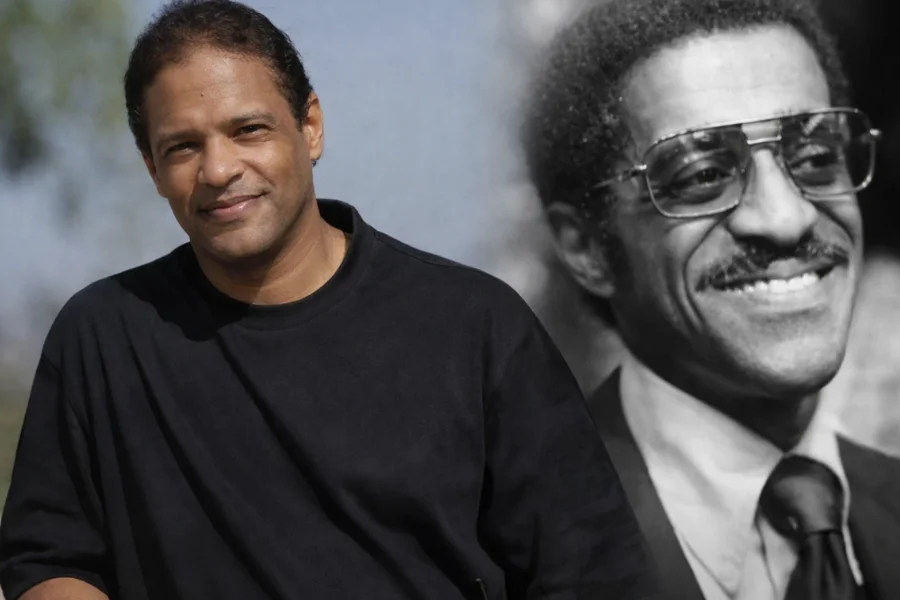
Picture the most dazzling household in 1960s Hollywood. Music playing constantly. Famous faces dropping by. A father who could tap dance, sing jazz, do impressions, and make an entire room laugh without trying. A mother who was one of the most elegant women in the film world.
That was Mark Sydney Davis’s childhood home.
And yet, the most remarkable thing about Mark is not who raised him. It is who he chose to become on his own.
He is Sammy Davis Jr.’s adopted son. That fact alone would be enough to fill a magazine article. But Mark’s story goes so much deeper. There is mystery surrounding his birth. There are questions that have never been fully answered, even after a DNA test that the whole world watched. There is a deathbed whisper from one of the greatest entertainers who ever lived. And underneath all of that drama, there is a man who simply decided he wanted a quiet life — and went and built one.
This is his story. The full version.
Quick Facts
| Detail | Information |
|---|---|
| Full Name | Mark Sydney Davis |
| Date of Birth | April 6, 1960 |
| Place of Birth | Los Angeles, California, USA |
| Nationality | American |
| Adoptive Father | Sammy Davis Jr. (entertainer, Rat Pack member) |
| Adoptive Mother | May Britt (Swedish actress) |
| Siblings | Tracey Hillevi Davis (biological daughter of Sammy & May; died November 2, 2020); Jeff Nathaniel Davis (also adopted); Manny Davis (half-brother, from Sammy’s third marriage) |
| Adoption Finalized | June 3, 1963 |
| Education | George Whittell High School (near Lake Tahoe, Nevada) |
| Careers | Assistant Stage Manager (1980s); Photo Clerk at Costco, Hollywood |
| Marriages | Three times (spouses’ names kept private) |
| Children | Ryan Davis, Andrew (Andy) Davis |
| DNA Test Result | Confirmed not biologically related to Sammy Davis Jr. (2015) |
| Net Worth | Not publicly disclosed; believed to be modest |
| Residence | Los Angeles, California |
| Known For | Being Sammy Davis Jr.’s adopted son; advocating for adoption |
Born in Los Angeles: A Mystery from the Very Beginning
Mark Sydney Davis entered the world on April 6, 1960, in Los Angeles, California. That much is documented. What is far less clear is the story of who brought him into that world.
His birth certificate, the legal document that is supposed to answer exactly this question, listed Sammy Davis Jr. and May Britt as his parents. But the couple was not yet married in early 1960, and Sammy and May’s legal adoption of Mark was not finalized until June 3, 1963, when Mark was already three years old.
That gap — between the birth certificate listing two people as parents and the formal adoption happening years later — is where the mystery lives. It has fueled speculation for decades. Was the birth certificate a genuine legal reflection of biological parentage? Was it filled out to protect a biological mother who could not be identified publicly? Was it the result of a private arrangement that Hollywood’s most famous entertainer needed to keep quiet during an era when interracial relationships were already making headlines across America?
Nobody has ever produced a clean, satisfying answer. And that ambiguity would follow Mark Sydney Davis for the rest of his life.
The Family He Was Given: Sammy, May, and an Extraordinary Household
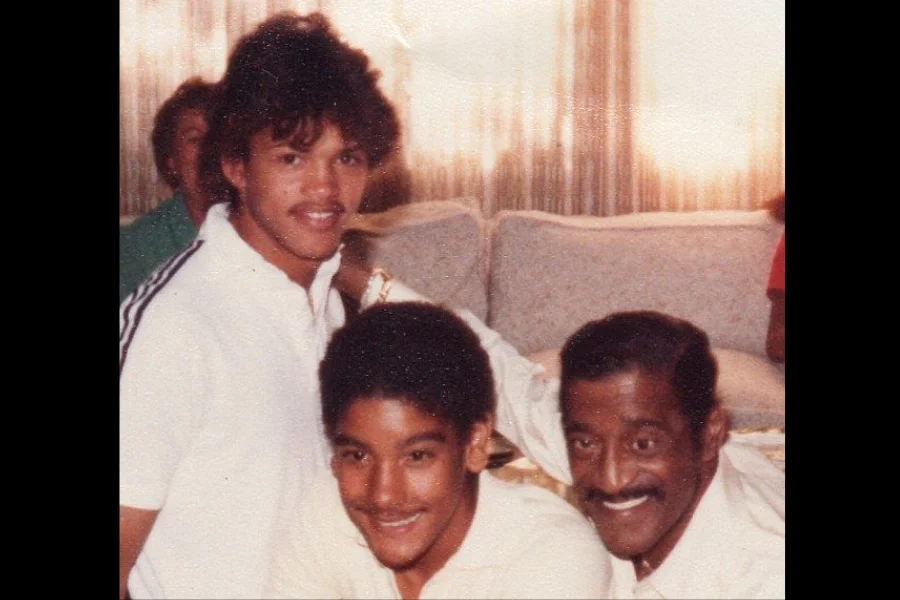
Sammy Davis Jr. was, by virtually every serious measure, the most complete entertainer of the twentieth century. He could sing. He could dance — tap specifically, with a precision and rhythm that professionals still study today. He was a skilled actor. He could do impressions of almost anyone. He played multiple instruments. He was a comedian. He was a member of the Rat Pack alongside Frank Sinatra and Dean Martin, which placed him at the very center of American entertainment culture for decades.
He was also one of the most racially provocative figures of his time. As a Black man with Jewish faith in an America that still enforced segregation in significant parts of the country, Sammy defied convention simply by existing publicly the way he did. When he married May Britt — a blonde Swedish actress — in November 1960, the American cultural machinery nearly overheated.
May Britt was no background character in this story. She was a film actress who had built a serious career in both European and Hollywood productions. She was educated, thoughtful, and possessed the particular kind of composure that comes from being accustomed to scrutiny. She gave up her acting career when she married Sammy — a painful professional sacrifice that reflected both the social pressure of the era and her own commitment to the family they were building together.
Into this household — famous, creative, racially complicated, and genuinely loving — came Mark Sydney Davis.
Growing Up Davis: Glamour, Pressure, and an Absent Father
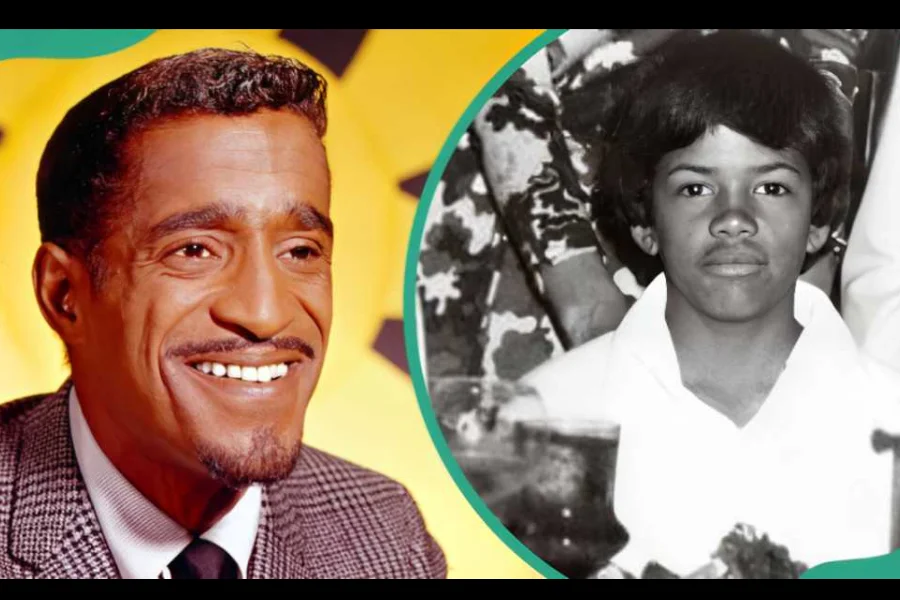
Mark grew up in a home that most children could not even imagine. Lavish surroundings. Famous guests. The constant presence of music, performance energy, and creative conversation. His grandfather, Samuel George Davis Sr., had been a stage performer. His grandmother, Elvera “Baby” Sanchez Davis, was a celebrated tap dancer. Artistic talent and entertainment history ran through the family like a current.
But a famous father is not always a present one. Sammy’s career demanded everything from him — long tour schedules, film commitments, television appearances, the endless machinery of being one of the most in-demand performers in the world. The road took him away from home with a frequency that left real gaps in daily family life.
Mark grew up alongside his siblings: Tracey, who was the biological daughter of Sammy and May and who would later become an author and speaker about her own experiences growing up Davis; Jeff Nathaniel, who was also adopted; and eventually Manny, who came along from Sammy’s later relationship and third marriage to Altovise Joanne Gore.
The four of them navigated the particular pressure of being Sammy Davis Jr.’s children. Public curiosity. The weight of comparison. The knowledge that the man at the head of their dinner table was being watched and discussed by millions of people who felt they had some claim to him.
That kind of upbringing leaves marks. Both the obvious ones and the invisible ones.
School and Education: Nevada, Mountains, and Stepping Away from Hollywood
Mark attended George Whittell High School, located near Lake Tahoe in Nevada. This is a geographically interesting detail. Lake Tahoe sits roughly 450 miles north of Los Angeles — far enough from Hollywood to offer a very different kind of adolescence than most celebrity children experience.
Whether the family’s Nevada connection came through one of Sammy’s many Las Vegas residencies and business interests, or whether Mark was specifically sent away from the Los Angeles spotlight for the normalcy that distance can provide, the record does not definitively say. What it does suggest is that at least part of Mark’s formative years were spent in a mountain community, away from the cameras and the constant social weight of his father’s celebrity.
Lake Tahoe in the 1970s was beautiful, cold, and quiet in ways that Los Angeles simply is not. It is the kind of place that teaches a certain groundedness — an appreciation for things that are simple and real rather than performed and presented.
Whether or not that environment directly shaped him, Mark Sydney Davis did not emerge from his education with Hollywood ambitions. He emerged as someone who wanted to be useful, to be close to work he understood, and to not be famous for its own sake.
Career: Backstage First, Then Completely Off Stage
In the 1980s, Mark found a way to be near the world he had grown up in without standing at its center. He worked as an assistant stage manager during his father’s touring performances across the United States.
Think about what that job actually involves. You are responsible for props — making sure the right items are in the right place at exactly the right moment before a performer walks on stage. You manage timing. You coordinate with lighting, sound, and crew. You keep things running in the chaotic minutes before a performance begins.
For Sammy Davis Jr.’s shows specifically, this meant handling things like his iconic tap shoes — the ones whose sound audiences recognized. The whiskey glass. The autocue. The hundred small details that make a professional performance look effortless from the seats.
Mark was good at this work. It kept him close to his father during a period when that closeness mattered. And it gave him a genuine education in what discipline, preparation, and performance actually require behind the curtain.
But he did not stay backstage forever in the entertainment sense. When Sammy died in 1990, something shifted. The anchor to that world was gone. And Mark made a choice that surprised the people who expected celebrity children to always orbit celebrity.
He stepped completely away from entertainment. He eventually ended up working at a Costco store in the Hollywood area of Los Angeles — specifically behind the photo counter. By 2015, when various journalists caught up with his story again following his public disclosure of Sammy’s deathbed words, that was where he was working.
A photo clerk. At a warehouse retail store. In Hollywood, of all places. With a last name that the customers helping him probably sometimes recognized.
That takes a particular kind of self-possession. And it says more about Mark Sydney Davis than almost any other fact in his story.
The Deathbed Confession: A Moment That Changed Everything
Sammy Davis Jr. died on May 16, 1990, from throat cancer. He was sixty-four years old. The illness had moved quickly once it was diagnosed, and Sammy spent his final weeks surrounded by family.
Mark was among those who came to say goodbye. He walked to his father’s bedside. He leaned down and gave him a kiss. And in that moment, as Mark has described it in interviews, Sammy looked at him and said: “You are my son.”
Those four words have never stopped reverberating.
At first, Mark may have understood them as an expression of love — the kind of thing a dying father says to the child he raised, confirming the emotional truth of a bond that does not require legal documentation or biology. That interpretation is warm and real and probably partially accurate.
But the words lingered. And they created questions. Because Mark’s birth certificate had always listed Sammy as his father. And May Britt, when Mark later went to her and asked her directly whether she was his biological mother, told him plainly that she was not. More surprisingly, she told him she did not know who his biological mother was.
That answer sent Mark down a path that would take years to reach any kind of resolution. And even then, the resolution raised more questions than it settled.
The DNA Question: Science Answers, But Mystery Remains
In 2015, Mark went public with his story through an appearance on Inside Edition. He shared the details of Sammy’s deathbed words. He shared his confusion about his birth certificate. He shared May Britt’s surprising admission. And he participated in DNA testing that would be compared against samples from his sister Tracey.
The result came back clearly. Mark and Tracey did not share DNA. They were not biologically related. Which meant that Sammy Davis Jr. was not Mark’s biological father, despite what the birth certificate said, and despite what Sammy whispered from his hospital bed.
For most people, a negative DNA result would feel like a closing of doors. But Mark’s situation is more philosophically interesting than that. Because what Sammy said — you are my son — was not scientifically false even if it was biologically inaccurate. Sammy raised him. Sammy employed him. Sammy loved him. The relationship was real and deep, regardless of genetics.
The unanswered question — the one that no DNA test can resolve — is why his birth certificate listed Sammy and May as biological parents in the first place. Theories circulate. Maybe Mark was the child of a relationship Sammy had with a woman he could not publicly acknowledge in 1960s America. Maybe the birth certificate was deliberately altered to protect both the child and someone else. Maybe Mark was the son of someone in Sammy’s close circle. No definitive answer has ever emerged.
What Mark has said publicly is that he holds onto the love, not the confusion. His father told him he was his son. He believes that. He does not need the biology to confirm what he already knows was real.
Hard Times: Alcoholism, Divorce, and Personal Rebuilding
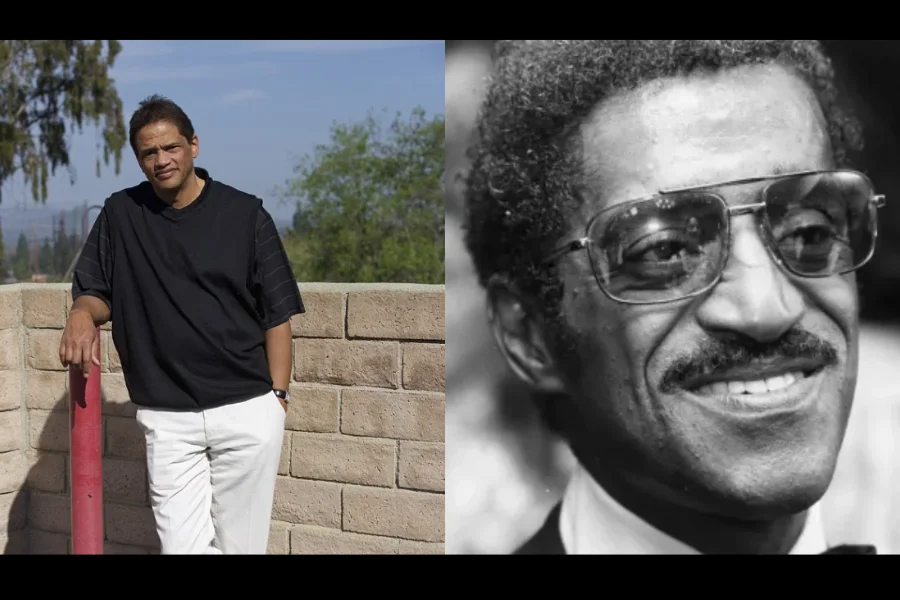
Mark’s life has not been without its painful chapters. The combination of an unusual upbringing, the loss of his famous and beloved father, and the ongoing uncertainty about his own origins created pressures that would wear anyone down.
He has spoken about struggling with alcoholism at various points in his adult life. Reaching for alcohol as a response to pain is one of the oldest human stories there is, and it is particularly common among people who grew up in households where substance use was normalized by the entertainment culture that surrounded them. Sammy Davis Jr. himself had well-documented struggles with alcohol and other substances throughout his life.
Mark went through multiple rounds of rehabilitation. The fact that he went back more than once before achieving sobriety is not a mark against him — it is a mark of someone who kept trying when it would have been easier to stop. Recovery is not a single event. It is a repeated choice.
His personal relationships also went through turbulence. He has been married three times. The names of his spouses have been kept private, consistent with his overall approach to protecting the people in his personal life from public exposure. The marriages and their endings clearly involved real emotional cost, as all significant relationships do.
What is clear from the pattern of his life is that Mark came through these hard periods without becoming defined by them. He got sober. He remained a father. He kept showing up.
Family of His Own: Ryan, Andrew, and the Father He Chose to Be
Mark Sydney Davis has two sons: Ryan Davis and Andrew (Andy) Davis.
Details about their lives — where they went to school, what they do professionally, whether they have families of their own — are not publicly available. This is entirely deliberate. Mark has been consistent about drawing a hard line between his own minimal public profile and any exposure of his children to the attention that comes with the Davis name.
What is documented is how seriously Mark takes fatherhood. He has spoken about it in terms that reflect a man who has thought carefully about his own childhood and what he wanted to do differently. He was aware that Sammy’s career kept him away from home more than a father should be. He was aware that growing up without clear answers about where you came from creates a particular kind of longing. He wanted to be present in ways that would give his sons a stable sense of being loved and known.
He has described his approach to parenting as built around open communication and physical presence. Not the performance of fatherhood — not the Instagram version — but the actual daily work of being available, of answering questions, of sitting with his sons through whatever they are going through.
He also became a vocal advocate for adoption. Having been adopted himself, having grown up in that identity and wrestled with its complications, he understands from the inside what adopted children need to hear and feel. He has used his platform — small as it is by celebrity standards — to speak about the importance of love and belonging over biology. That message, coming from someone who lived it, carries weight that no press release or charity campaign can manufacture.
Sammy Davis Jr.’s Legacy and What Mark Inherited
When Sammy Davis Jr. died, he left behind a complicated financial picture. For all the vast wealth his career generated, Sammy was also a man of enormous personal generosity, lavish lifestyle, and complicated business arrangements. There were tax debts. There were creditors. The estate was not the clean inheritance one might expect from one of the most commercially successful entertainers of the twentieth century.
Altovise Gore, Sammy’s third wife and widow, spent years after his death managing those financial complications. For Mark and the other children, whatever they received from the estate was likely modest relative to what most people would assume.
Mark’s own financial life has never been publicly discussed. His career choices — assistant stage manager, then photo clerk — do not suggest wealth accumulation as a priority. He lives in Los Angeles, which is expensive, but by all indicators he lives simply. He has not written a memoir or turned his famous last name into a commercial product. He has not launched a podcast or a speaking career built on Sammy’s legacy.
His net worth, whatever it is, reflects a life lived on values rather than visibility.
Tragedy in the Family: Losing Tracey
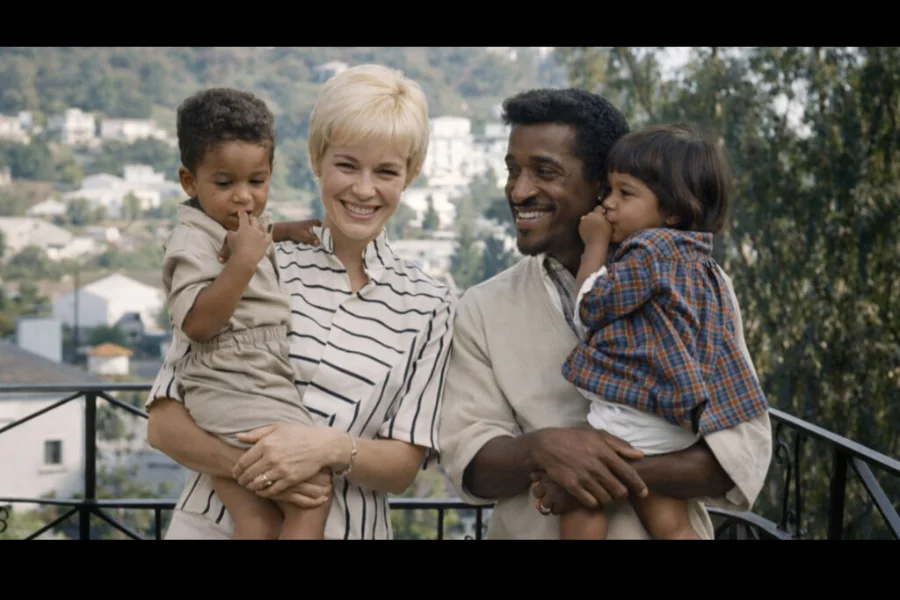
On November 2, 2020, Mark’s sister Tracey Hillevi Davis died. She was sixty years old.
Tracey had been the biological daughter of Sammy and May — the only child born to them rather than adopted. She had built her own public presence through a book about growing up as Sammy Davis Jr.’s daughter, and through speaking engagements about her family and her father’s legacy. She was a connector between the Davis family history and the public that still cared deeply about it.
Her death at sixty was a significant loss for everyone who knew and loved her. For Mark, losing a sibling — and one whose DNA confirmed the biological relationship to Sammy that his own test had ruled out — was a particular kind of grief. It closed one of the last direct links to the family as it had been when Sammy and May were still at its center.
Where He Is Now: Quiet, Present, and at Peace
As of 2026, Mark Sydney Davis is living in Los Angeles. He continues to maintain the private life he has consistently chosen. There are no recent press interviews. No social media presence. No documentary appearances touting the Davis name.
His advocacy for adoption appears to remain a quiet ongoing commitment — the kind that does not generate headlines but that probably reaches people who need to hear it in ways that are more meaningful than any viral moment could provide.
His sons Ryan and Andrew are adults now, building their own lives with the benefit of having had a father who, by all available evidence, chose them deliberately and showed up for them consistently.
Mark Sydney Davis is sixty-six years old. He has lived a life that began with one of the most extraordinary and complicated starts imaginable — born into mystery, adopted into legend, raised in a household that most people only know from biographies and documentary films. He has survived grief, addiction, uncertainty about his own origins, and the particular loneliness of being famous by association without ever wanting to be famous at all.
And he has done it, ultimately, with grace. Not the performative kind. The real kind. The kind that does not need an audience.
Why Mark Sydney Davis’s Story Deserves to Be Told
Here is what gets missed when people only look at Mark Sydney Davis through the lens of his father’s fame.
His life is actually a story about identity. About what makes a person who they are when you strip away the name they inherited and the house they grew up in. About whether the love that shaped you counts for anything when science says it had no biological basis. About whether a man who tells you on his deathbed that you are his son is telling the truth even if a DNA test says otherwise.
Mark’s answer to all of those questions, lived out quietly in Los Angeles for six decades, is this: love is the most real thing. What was given to him — by Sammy’s generosity, by May’s grace, by the siblings who grew up beside him — was real. It did not require biology to be true.
He chose not to be famous. He chose to be present for his children instead. He chose to work ordinary jobs and live an ordinary life while carrying an extraordinary name. He chose sobriety when he could have stayed lost. He chose to advocate for other adopted children instead of keeping his complicated experience entirely to himself.
None of those choices made headlines. All of them made a life.
Also Read: Jillian Stacey
FAQs
1. Who is Mark Sydney Davis?
He is the adopted son of entertainment legend Sammy Davis Jr. and Swedish actress May Britt. Born in Los Angeles in 1960, he was formally adopted on June 3, 1963. Despite his famous parentage, he has lived a deliberately private life away from entertainment and celebrity culture.
2. Is Mark Sydney Davis the biological son of Sammy Davis Jr.?
No. In 2015, a DNA test confirmed that Mark does not share biological DNA with Sammy Davis Jr. or with his sister Tracey, who was Sammy and May’s only biological child. However, Sammy’s birth certificate listed him as Mark’s biological father, and Sammy himself told Mark on his deathbed, “You are my son” — a statement whose meaning goes beyond genetics.
3. Who is Mark’s biological mother?
This has never been confirmed. When Mark asked May Britt directly whether she was his birth mother, she told him she was not — and that she did not know who was. The origin of Mark’s birth and who his biological parents actually were remains genuinely unresolved.
4. Where did Mark Sydney Davis grow up?
He grew up in his family’s home in the Los Angeles area, though he attended George Whittell High School near Lake Tahoe in Nevada — a significant geographic distance from the Hollywood world his father inhabited.
5. What did Mark do for work?
In the 1980s he served as assistant stage manager on his father’s U.S. touring performances, managing props and backstage logistics. After Sammy’s death in 1990 he stepped away from entertainment entirely. By 2015, he was working as a photo clerk at a Costco store in the Hollywood area of Los Angeles.
6. Has Mark Sydney Davis been married?
Yes, three times. The names of his former and/or current spouses have been kept private throughout. He has been consistent about protecting his family members from public attention.
7. Does Mark Sydney Davis have children?
Yes. He has two sons, Ryan Davis and Andrew (Andy) Davis. Their lives are kept private. Mark has spoken about being a committed, present father as a deliberate personal priority.
8. What is Mark Sydney Davis’s net worth?
It has never been disclosed. His career choices — stage management and retail work — suggest he lives modestly rather than from any inherited wealth. Sammy Davis Jr.’s estate itself faced significant financial complications including tax debts, meaning whatever Mark may have inherited was likely far less than people assume.
9. What happened to Mark’s sister Tracey?
Tracey Hillevi Davis — the only biological child of Sammy and May, and Mark’s sister — died on November 2, 2020, at the age of sixty. Her death was a significant loss for the Davis family.
10. Did Mark have a difficult relationship with his father?
Their relationship was close but not without complication. Sammy’s demanding touring schedule kept him away from home frequently during Mark’s childhood. There were also reported tensions related to Sammy’s personal life and romantic interests. But the emotional bond remained, evidenced by Sammy’s final words to Mark and by Mark’s own consistent description of his father with love and respect.
11. What does Mark believe about his own identity?
He has spoken about the DNA results not changing how he feels about his father. The love and relationship were real. He identifies Sammy Davis Jr. as his father — not as a legal technicality but as a lived truth. He has also become an advocate for adopted children, using his own complicated experience to support others navigating similar questions of identity and belonging.
12. Where is Mark Sydney Davis now?
As of 2026, he is believed to be living in Los Angeles, focused on his private life, his sons, and the quiet kind of existence he has always preferred over public attention. He does not maintain a known public social media presence and has not sought media appearances in recent years.
Related post: Elisa Larregui