Some people write history from a stage. Jesus Lechuga wrote his from the background — and that, more than anything else, is what makes him worth understanding.
His name doesn’t show up in textbooks. You won’t find him in political databases or celebrity directories. Yet he was, by all accounts, a significant human being. He was a committed participant in the Chicano civil rights movement at a time when that movement was shaping the consciousness of Mexican-American communities across the country. He was a husband. A father. A co-parent who, even after a marriage ended, kept showing up for the people he loved.
Most people first encounter his name because of who he was married to — Karen Bass, the politician who went on to become the first female Mayor of Los Angeles. But reducing him to a footnote in someone else’s story would be doing him a disservice. Jesus Lechuga had his own convictions, his own role in history, and his own quiet way of mattering to the world.
This is his story, told as completely as the available facts allow.
Quick Facts
| Full Name | Jesus Lechuga |
| Nationality | American |
| Ethnicity | Latino / Chicano (Mexican-American) |
| Birth Year (approx.) | Around the early 1950s (exact date not public) |
| Death | Sometime in the 2010s (exact date not disclosed) |
| Notable For | Chicano Movement leadership; ex-husband of LA Mayor Karen Bass |
| Marriage | Married Karen Bass 1980 – divorced 1986 |
| Biological Daughter | Emilia Bass-Lechuga (1983 – 2006) |
| Other Children | Scythia, Omar, Yvette, and Ollin (from later relationship) |
| Connected To | Karen Bass — first female Mayor of Los Angeles |
| Net Worth | Never publicly reported; lived a private, modest life |
| Life Philosophy | Family first; stayed far from public attention |
Early Life and Background
The exact details of Jesus Lechuga’s birth — the date, the city, the circumstances — were never made public. He was a private person from the start, and that privacy extended even to his earliest years. What we do know is that he was American, of Mexican descent, and deeply rooted in the Chicano identity that would define much of his adult life.
Growing up Latino in mid-20th-century America meant navigating a world that didn’t always make room for you. Discrimination in schools, housing, and the workplace wasn’t a distant abstraction — it was everyday reality. For young men like Jesus, that reality didn’t breed resignation. For many, it bred purpose.
The Chicano community he belonged to was undergoing a transformation in the 1960s and 1970s. A new generation of Mexican-Americans was refusing to be invisible. They were organizing, marching, demanding bilingual education, and reclaiming a cultural identity that had long been suppressed. Jesus Lechuga became part of that wave.
We don’t know exactly what his household looked like, or which relatives shaped his early thinking. But the person he became — activist, father, quiet pillar — suggests he was raised in an environment where community and responsibility were taken seriously.
His Education
Specific records about Jesus Lechuga’s schooling have never surfaced publicly. No university, no degree program, no graduation year has been reported in any verified source. This is consistent with who he was: someone who operated in community spaces rather than institutional ones.
What’s clear is that his real education happened in the streets, in meeting rooms, and in the activist circles of the Chicano Movement. The movement itself was deeply invested in education — demanding Chicano studies programs, pushing for increased enrollment of Latino students in universities, and creating alternative schools and community centers that gave young people something the traditional system wasn’t offering.
Jesus was part of that world. He absorbed its ideas, its history, and its methods. That counts as an education in the fullest sense of the word, even if no diploma documents it.
His Place in History
This is where Jesus Lechuga steps out of the shadows, at least briefly. According to Karen Bass herself — in a verified interview with NBC News — Jesus Lechuga was not just sympathetic to the Chicano Movement. He was a leader within it.
Karen Bass confirmed in a 2020 NBC News interview that her former husband Jesús Lechuga was Chicano and “a leader in the Chicano Movement.” She noted that this connection shaped her own understanding of the Latino experience in America.— NBC News, 2020
The Chicano Movement was one of the defining civil rights struggles of its era. It grew out of the Mexican-American community’s push for recognition, dignity, and political power. Figures like César Chávez and Dolores Huerta were fighting for farmworkers’ rights. Students were walking out of high schools in protest of unequal treatment. Artists were painting murals that turned alley walls into declarations of identity.
Jesus Lechuga moved through this landscape as an active participant. His role wasn’t ceremonial — he was on the ground, doing the work. The nature of that work, the specific organizations he belonged to, the campaigns he was part of — those details aren’t fully documented. But the fact that Karen Bass, a politician known for precision and credibility, described him as a leader means his contribution was real and recognized by those who knew it firsthand.
The movement also connected him to something larger than activism. It connected him to Karen Bass.
How He Met Karen Bass — A Trip That Changed Everything
The story of how Jesus Lechuga and Karen Bass found each other is genuinely interesting. It didn’t happen at a local event or through mutual friends in Los Angeles. It happened in Cuba.
Karen Bass, who was already engaged in community and political organizing, traveled to Cuba — and it was on that first trip that she met Jesus Lechuga. Two activists from different communities, crossing paths in an unexpected place. Whatever was said or felt between them in those early encounters must have been substantial, because they came back to the United States and built a life together.
They married in 1980. Karen was 26 at the time. The union brought two worlds together — her Black activist community and his Chicano one — in a marriage that reflected the broader alliances being forged during that political era.
During their marriage, Karen changed her surname. She went by Karen Bass-Lechuga. It was a gesture that spoke to how fully she had entered his world, and how seriously both of them were taking the partnership they’d made.
Marriage, Children, and the Family He Built
Jesus and Karen had one child together — a daughter, born on January 2, 1983. They named her Emilia. Her full name, Emilia Bass-Lechuga, carried both her parents’ identities, and later in life she would describe herself as “Blacxican” — a blend of Black and Chicano heritage that made her a living symbol of what her parents’ union represented.
Their marriage lasted six years. They divorced in 1986. But here is the part of the story that sets Jesus Lechuga apart from so many others: the divorce did not end the family. It simply changed its shape.
After separating from Karen, Jesus eventually moved into another relationship and had four more children — Scythia, Omar, Yvette, and Ollin. Karen Bass stayed in their lives. Not as a distant courtesy figure, but as a genuine presence. She drove them to doctors’ appointments. She loaded them all into a van and took them to the beach. She attended school events and birthday parties. Scythia, one of the children, would later say that Karen Bass had been a part of her life since before she could remember — since she was in the womb.
That kind of family arrangement doesn’t happen without the steady, quiet cooperation of the man at its center. Jesus Lechuga was the thread connecting these different children, these different households, into something that functioned as a real family. He didn’t make headlines doing it. He just did it.
The Loss That Broke Everything — The Death of Emilia
On October 29, 2006, a 1997 Hyundai traveling south on the 405 Freeway near Los Angeles International Airport veered off the road in the early hours of the morning. The car struck a concrete support pillar beneath the La Tijera Boulevard overpass and caught fire. A passerby stopped and tried to pull one of the passengers to safety, but the flames spread too fast.
Both people in the car — Emilia Bass-Lechuga and her husband Michael Wright, both 23 years old — died at the scene.
Emilia had been a student at Loyola Marymount University. She had her whole adult life ahead of her. She had planned to follow in her mother’s footsteps, working toward social change. She had found love, gotten married, and was building something. Then in a single night on a Los Angeles freeway, all of it was gone.
For Jesus Lechuga, this was the worst thing a parent can experience. Losing a child doesn’t fit into ordinary grief. It doesn’t come with a proper timeline for recovery. Karen Bass later spoke publicly about how difficult it was to continue showing up for her political responsibilities while dealing with that kind of devastation privately — and she was a woman with decades of experience enduring difficult things.
For Jesus, who had always kept his life away from public view, the grief was carried internally. There were no press statements, no public tributes from him. But the loss was real, and it stayed with both parents for the rest of their lives.
The two of them had already proven they could maintain a cooperative family structure after divorce. After Emilia’s death, they did what they had always done — they stayed present for each other and for the children still living.
His Later Years — A Life Lived Quietly
After his divorce from Karen Bass, and as his children grew older, Jesus Lechuga continued to live outside of public view. He never gave interviews. He never wrote a memoir. He didn’t leverage his connection to an increasingly prominent politician for any kind of personal gain or visibility.
From what Karen Bass has shared in various public settings over the years, Jesus remained close to his family and continued to be a steady presence in the lives of his children. When she spoke about her family on the campaign trail for her mayoral run in 2022, his children — her stepchildren — showed up to support her. That kind of loyalty doesn’t come from absence. It comes from a father who taught his kids something about standing by the people who matter to you.
Karen Bass also mentioned that after Jesus passed away, his youngest child asked her to formally adopt her. That request says everything about the kind of extended family Jesus had nurtured throughout his life — one where the love outlasted every legal or biological boundary.
When He Died — What We Know
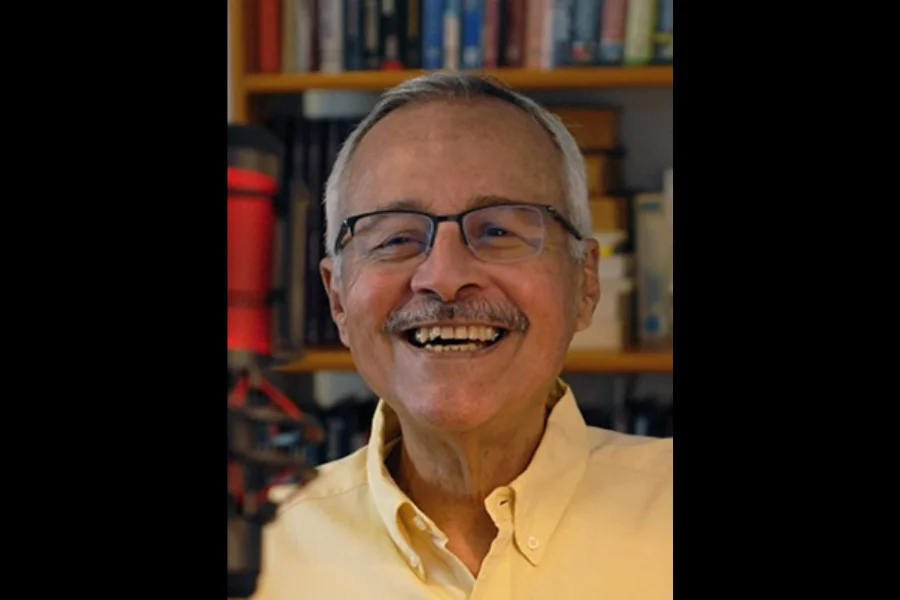
Jesus Lechuga passed away sometime during the 2010s. Karen Bass confirmed his death in the 2020 NBC News interview, saying that he had died and that the children they had co-parented “remain” a part of her life even after his passing. The specific year, the cause of death, and the circumstances were never publicly disclosed.
This was entirely in keeping with how he had lived. He had shielded himself from public scrutiny for decades. His death was handled the same way — with privacy and dignity, away from the glare.
In 2020, Karen Bass referred to him with unmistakable warmth and respect. She spoke about the children they had raised together as though the connection was ongoing, as though his death hadn’t ended what they had built — it had simply made her the keeper of it.
His Money and Net Worth — The Simple Truth
There are no verified figures for Jesus Lechuga’s net worth because he was never a public figure, never ran a company that filed public disclosures, and never appeared on any financial rankings. No credible source has ever reported a specific number.
What we can say is that his life was defined by values that had very little to do with the accumulation of wealth. He was a civil rights activist during a period when activism meant sacrifice, not salary. He raised five children across two households. He lived privately and simply.
Karen Bass’s stepchildren have spoken publicly about the fact that their family was not wealthy. One of them, Scythia, joked during the 2022 mayoral campaign about rumors that Bass was a millionaire — dismissing the idea as absurd based on her own experience growing up with her. That context tells you something about the financial environment Jesus Lechuga created for his family. It wasn’t about money. It was about presence.
What He Left Behind — His Real Legacy
If you measure a person’s importance by how many Google results they generate, Jesus Lechuga scores modestly. But that’s the wrong measure entirely.
He was a leader in a civil rights movement that fought for the dignity and recognition of millions of Mexican-Americans. His influence on Karen Bass — who absorbed his understanding of the Latino experience and carried it into decades of public service — is embedded in her legislative record, her community relationships, and her governing philosophy as Mayor of Los Angeles. That’s a kind of indirect impact that doesn’t get tabulated, but it’s real.
He raised five children, biological and step, in two households, under circumstances that would have given many people an excuse to disengage. He didn’t. Every one of those children grew up knowing that the man at the center of their family was reliable, present, and consistent.
He showed Karen Bass what a Chicano family looked like from the inside — the culture, the food, the community bonds, the history. She later described that experience as genuinely formative. It changed how she understood what she was fighting for.
And he died quietly, having never asked for anything in return.
That is a legacy.
Also read: Michael Galeotti
Frequently Asked Questions
Who exactly was Jesus Lechuga?
Jesus Lechuga was a Mexican-American man involved in the Chicano civil rights movement. He is also recognized as the former husband of Karen Bass, who later became Mayor of Los Angeles. He lived a largely private life away from media attention.
How did Jesus Lechuga and Karen Bass meet?
They met during Karen Bass’s first trip to Cuba while both were engaged in activist work. Their shared experiences there led to a connection that later became a marriage in the United States.
When did they get married and when did they divorce?
Jesus Lechuga and Karen Bass married in 1980. Their marriage ended in 1986 after six years together. Despite the divorce, they remained connected through family ties.
Did they have children together?
Yes, they had one biological daughter named Emilia Bass-Lechuga, born on January 2, 1983. Jesus also had four additional children named Scythia, Omar, Yvette, and Ollin from a later relationship.
What happened to their daughter Emilia?
Emilia Bass-Lechuga and her husband Michael Wright died in a car accident on October 29, 2006. Their vehicle crashed on the 405 Freeway near LAX and caught fire, killing both at the scene.
What role did Jesus Lechuga play in the Chicano Movement?
Karen Bass described him as a leader within the Chicano Movement in a 2020 NBC News interview. He was strongly connected to Chicano identity, culture, and activism throughout his life.
Did Jesus Lechuga remarry after the divorce?
Yes, he entered another relationship after divorcing Karen Bass, though the partner’s identity was not publicly disclosed. He had four more children, and Bass maintained relationships with them as part of the extended family.
When did Jesus Lechuga die?
He died sometime in the 2010s, as confirmed by Karen Bass in a 2020 interview. The exact date and cause of his death were never made public.
What was Jesus Lechuga’s net worth?
There are no verified public records of his net worth. He did not have a public-facing career focused on wealth, and he lived a modest and private lifestyle.
Why did Karen Bass keep such a close relationship with his children?
Karen Bass remained involved in their lives from childhood, where they considered her a mother figure. She continued supporting them through school and major life events even after the marriage ended.
Did Jesus Lechuga ever appear in public life or media?
No, he consistently avoided public attention and media exposure. He never gave interviews or participated in public political or media appearances.
What is Jesus Lechuga’s lasting significance?
His legacy includes participation in the Chicano civil rights movement and his influence on Karen Bass’s personal life. He also helped raise a blended family that remained closely connected across generations.
Discover more celebrity stories and exclusive articles at Celebrities Shere.