Some people step into history for just one moment. Then they vanish from the spotlight forever. Loray White is one of those people. Her name pops up in books and articles about old Hollywood. But almost nobody knows her full story. Today, we are going to dig into it together. Grab a cup of tea. This one is a slow burn.
Quick Facts Table
| Category | Details |
|---|---|
| Full name | Loray Betty White |
| Also known as | Sonora |
| Born | November 27, 1934 |
| Birthplace | Houston, Texas |
| Parents | Harold White and Joyce Mae Mills |
| Occupation | Dancer, singer, actress |
| Famous for | Brief 1958 marriage to Sammy Davis Jr. |
| Spouse | Sammy Davis Jr. (married 1958, divorced 1959) |
| Children | One child from a relationship before her marriage to Davis |
| Known film roles | The Notorious Cleopatra (1970), Miss Nymphet’s Zap-In (1970) |
| Net worth | Not publicly documented |
| Current status | Largely out of public view |
Who Was Loray White?
Loray White was a dancer and a singer. She also worked as an actress for a short while. But most people who hear her name today only know one thing about her. She was married to Sammy Davis Jr. for a little over a year.
That marriage was strange. It was not built on love at first sight. It was built on fear, pressure, and Hollywood politics. Loray White got pulled into one of the messiest chapters of 1950s show business. And she came out of it mostly forgotten.
But here is the thing. Before all that drama, she was already her own person. She had her own job. Her own stage time. Her own struggles as a young Black woman trying to make it in entertainment during a hard era for anyone who looked like her.
So let us start from the beginning. Let us walk through her life step by step.
Early Life: Growing Up in Houston
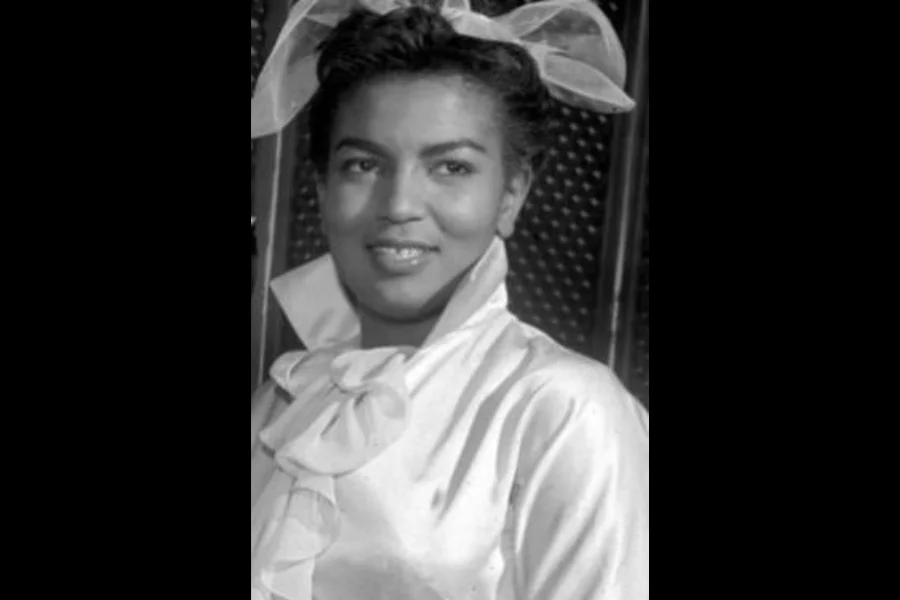
Loray Betty White was born on November 27, 1934. Her birthplace was Houston, Texas. Her parents were named Harold White and Joyce Mae Mills.
Texas in the 1930s was not an easy place for a Black family. Jim Crow laws shaped daily life. Schools were segregated. Job opportunities were limited. Public spaces were divided by race.
We do not have many details about her childhood. Records from this era are thin, especially for working-class families. We do not know much about her siblings, if she had any. We do not know what her parents did for work. We do not know which neighborhood she grew up in.
What we can guess is this. Growing up Black in Houston during the Great Depression meant a tough start. Many families moved often, chasing work. Many children helped support the household early. Entertainment, music, and church often gave young people their first taste of performing in front of a crowd.
It is likely that Loray found her love for singing and dancing somewhere in those early years. Many performers from this generation got their start in church choirs or local talent shows. There is no confirmed record of exactly how she began. But her path eventually led her toward the stage.
School and Early Training: A Story Mostly Untold
Here is where the trail goes cold for a while. There is no clear record of where Loray White went to school. There is no record of any university she may have attended.
This is actually pretty normal for performers from this time period, especially women of color. Many entertainers in the 1940s and 1950s did not have formal documentation of their education preserved anywhere. Newspapers focused on their stage work, not their report cards.
What we do know is that by the time she was in her twenties, she was already working as a performer. That tells us something important. She must have spent her teenage years building skills. Dancing takes years of practice. Singing takes training, even if it is informal. She likely learned through experience, performing in small clubs, talent shows, or local revues before working her way up.
By her early twenties, Loray had already lived through a lot. She had been married before. She had been divorced. And she had a young child. This was all before she ever crossed paths with Sammy Davis Jr.
Think about that for a second. By the time most people are just starting their careers, Loray White had already been through a marriage, a divorce, and motherhood. That is a heavy load for someone barely out of her teens.
How Her Career Started: Singing in Las Vegas
By the late 1950s, Loray White was working as a singer in Las Vegas. This was the golden era of the Las Vegas strip. Casinos were booming. Showrooms were packed every night. Performers moved between venues, building reputations through word of mouth and repeat bookings.
Loray worked at a club called the Silver Slipper. This was a real working gig, not a one-time appearance. She was part of the entertainment scene that powered Las Vegas nightlife during this period.
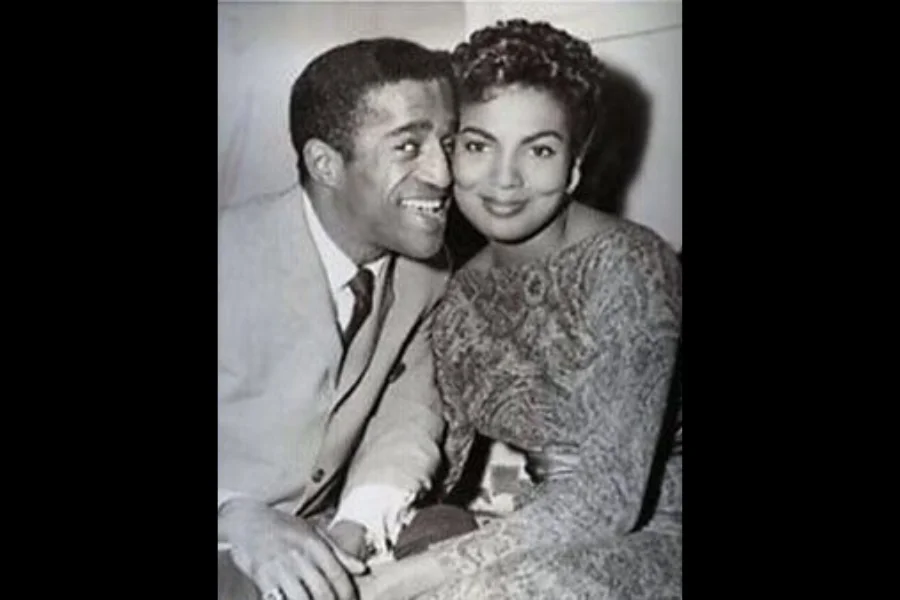
It was around this time that she crossed paths with Sammy Davis Jr. He was already a rising star. He performed near her venue. The two had reportedly gone out together a few times before everything changed.
This is where her career took an unexpected turn. Not because of talent. Not because of a big break on stage. But because of something happening behind the scenes in Davis’s personal life.
The Marriage That Changed Everything
In the mid-1950s, Sammy Davis Jr. had been involved in a relationship with a white actress. At that time, interracial relationships were a massive scandal in Hollywood. The pressure on Davis became intense. There were threats. There was real danger tied to the casino world and its connections to organized crime.
Davis needed a way out. According to multiple accounts, he decided the safest move was to marry someone quickly. Someone Black. Someone who could make the controversy disappear, at least for a while.
He chose Loray White.
The arrangement, as described in several historical accounts, involved a payment to Loray in exchange for going through with the wedding. The agreement reportedly included an understanding that the marriage would not last long. It was meant to calm down public attention, not to build a life together.
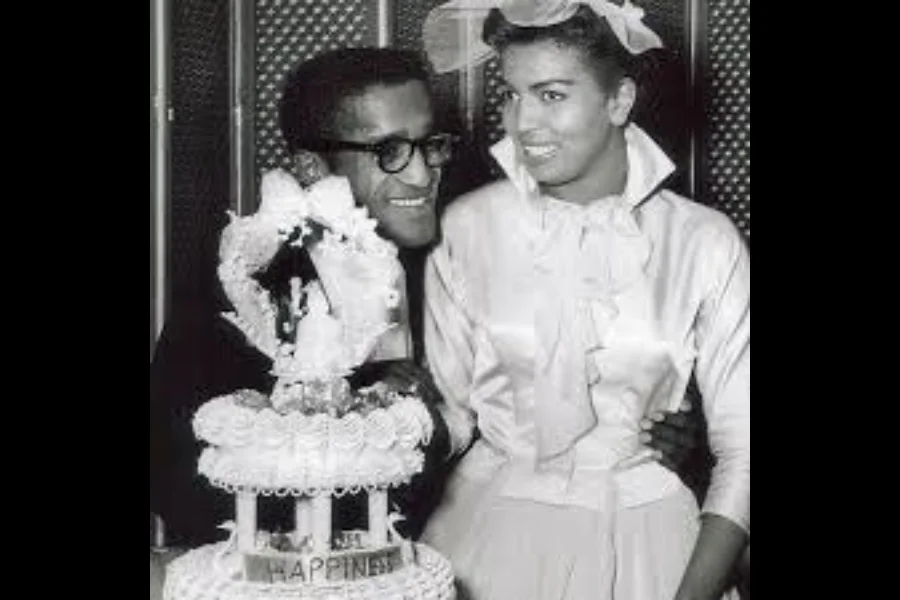
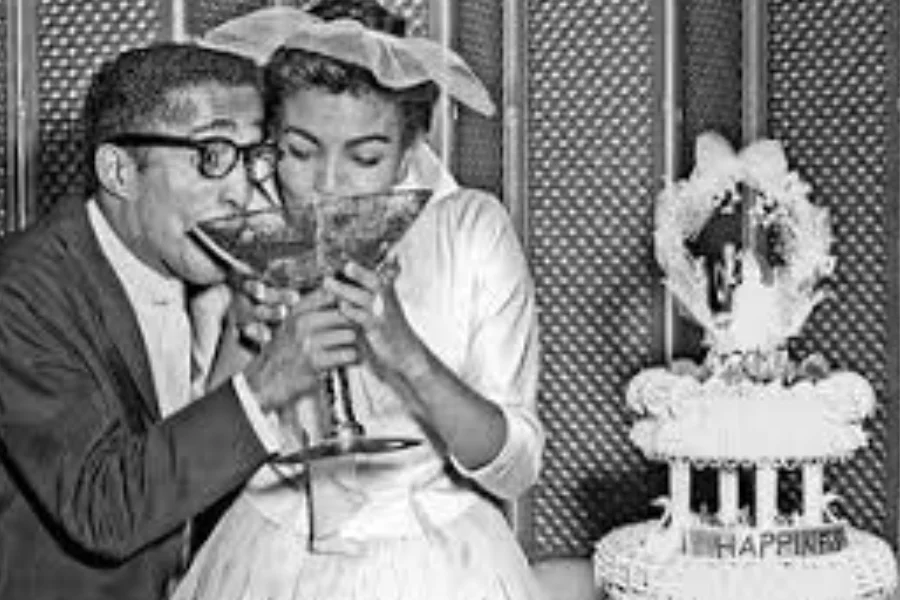
The wedding took place in January 1958, in Las Vegas, at the Sands Hotel. It was a public event with guests, cake, and toasts. From the outside, it looked like any other celebrity wedding of the era.
But behind closed doors, things were reportedly very dark. Several accounts describe a troubled wedding night. Davis is said to have been extremely drunk. There are reports that things turned frightening, with Davis later found in deep distress by someone close to him.
The couple reportedly never actually lived together as husband and wife. Within months, divorce proceedings began. By April 1959, the marriage was officially over.
For Loray White, this chapter of her life lasted just over a year. But it followed her for the rest of her life. It became the headline of her story, even though it was such a small part of her actual experience.
Career After the Marriage: A Few Film Roles
After the marriage ended, Loray White continued working in entertainment, though her public profile stayed small. She picked up a handful of acting credits in the years that followed.
One of her more notable roles came in 1970, in a film called The Notorious Cleopatra. She played the title character, Cleopatra, in this low-budget production. She also appeared in another film from the same year called Miss Nymphet’s Zap-In.
There is also a record of her appearing alongside musicians Lionel Hampton and Herb Jeffries in 1956, before her marriage to Davis. This shows she was active in entertainment circles even before the wedding made her name briefly famous.
These credits do not add up to a massive career. But they show someone who kept trying, kept showing up, and kept working in an industry that was not always kind to performers without major studio backing.
Awards and Big Moments
Here is the honest truth. There is no record of major awards for Loray White. No Grammy nominations. No film festival wins. No lifetime achievement honors.
Her biggest “moment,” in terms of public attention, was the wedding itself. It made headlines. It was covered by major entertainment magazines of the day. Photographers were there. Famous guests attended, including singer Harry Belafonte.
For a brief window in early 1958, Loray White’s name was known across the country. But it was attention tied to someone else’s story, not her own talent. That is a hard kind of fame to carry. People know your name, but they do not really know you.
Love Life, Marriage, and Family
Loray White’s romantic history is mostly defined by two things: a marriage before Sammy Davis Jr., and the marriage to him.
Before she ever met Davis, she had already been married and divorced. She had a child from that earlier part of her life. By the time she married Davis, she was a mother already raising a young child.
Her marriage to Davis lasted from January 1958 to April 1959. As discussed above, it was not a typical romance. It was arranged under pressure, tied to industry politics and personal danger that Davis was facing at the time.
After the divorce, there is very little public information about her personal life. We do not have confirmed details about any later marriages, relationships, or additional children. This part of her story remains private, whether by choice or simply because nobody documented it.
Struggles and Hard Times
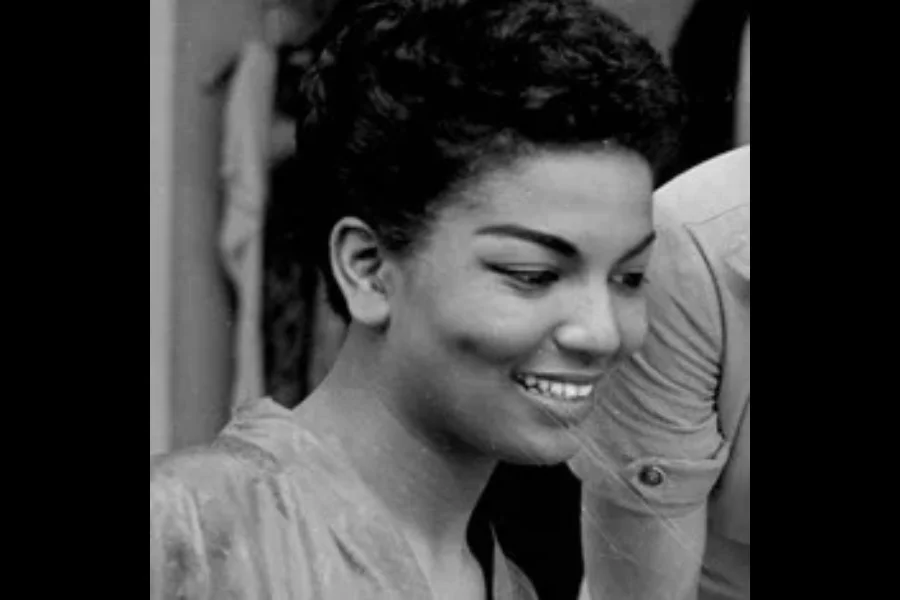
It is easy to read about a wedding with cake and champagne and think it sounds glamorous. But step back for a second. Loray White was a young woman, already a single mother, who agreed to marry a famous man she barely knew, under conditions arranged mostly for his benefit.
She reportedly went through a frightening wedding night. She entered a marriage that both sides apparently understood would not last. And then, when it ended, she had to go back to her regular life while the man she had married moved on to a high-profile relationship and remarriage just two years later.
Imagine being part of a story that big, then watching the world move on without you. The press coverage faded. The film roles stayed small. There was no big follow-up career boost from being connected to one of the most famous entertainers in America.
There is also the matter of how this story has been told over the years. Much of what is written about Loray White centers her as a supporting character in someone else’s biography. Her own voice, her own feelings about that period, her own version of events, these are largely missing from the historical record.
That silence is its own kind of struggle. Being talked about, but never really heard.
Money and Net Worth: What We Actually Know
Let us be straightforward here. There is no publicly available, verified net worth figure for Loray White. She was not a major box office star. She did not have a long recording career with hit albums. Her acting credits were limited to a small number of films decades ago.
Any number you might see floating around online claiming to be her “net worth” should be treated with heavy skepticism. These figures are often guesses, or copied from one low-quality source to another, without any real financial documentation behind them.
What we can say is this. Performers working in nightclub circuits during the 1950s typically earned modest, inconsistent income. Small film roles in low-budget productions from the early 1970s would not have paid large sums either. There is also the reported payment connected to her brief marriage, described in historical accounts as somewhere in the range of ten to twenty-five thousand dollars, depending on the source. Even at the higher end, adjusted for inflation, that would be a meaningful but not life-changing amount of money by today’s standards.
So the simple answer is: Loray White’s financial situation was likely modest throughout her career, typical for a working performer of her era, with no evidence of major wealth at any point.
What Is She Doing Now?
This is the hardest section to write, because the honest answer is: we do not know.
There is no recent news coverage of Loray White. There is no confirmed information about whether she is still living, and if so, where. There is no record of recent interviews, public appearances, or social media presence.
Some genealogy and family history sites contain scattered records under similar names, but matching these definitively to the Loray White connected to Sammy Davis Jr. is difficult without more solid documentation.
What we do know is that her story has experienced a small revival of interest in recent years. Writers and history enthusiasts have started digging back into 1950s Hollywood, looking at the people who got swept up in the era’s racial tensions and industry politics. Loray White’s brief marriage is part of that bigger picture, and her name keeps surfacing whenever people explore the life of Sammy Davis Jr.
Whether she is aware of this renewed attention, or whether she ever wanted it at all, remains unknown.
Also Read: Shaelyn Cado Killam
Final Thought
Loray White’s life shows something important about how history works. Sometimes a person becomes famous for one moment that was not really about them at all. They get pulled into someone else’s drama, and then the world forgets to ask about the rest of their life.
She was a singer. A dancer. A mother. A young woman trying to build a career during a tough time in American history. That is worth remembering too, not just the wedding photos from January 1958.
FAQ Section
1. Who was Loray White?
She was a dancer, singer, and actress, best known for a short marriage to Sammy Davis Jr. in 1958.
2. When and where was Loray White born?
She was born on November 27, 1934, in Houston, Texas.
3. Who were Loray White’s parents?
Her parents were Harold White and Joyce Mae Mills.
4. Did Loray White have any other names?
Yes, she was also known professionally as Sonora.
5. Was Loray White married before Sammy Davis Jr.?
Yes. Before marrying Davis, she had already been married, divorced, and was raising a young child.
6. Why did Loray White marry Sammy Davis Jr.?
Reports say the marriage was arranged to ease pressure on Davis, who was facing serious backlash and threats over an earlier relationship with a white actress.
7. How long did Loray White and Sammy Davis Jr. stay married?
They were married from January 1958 to April 1959, about fifteen months.
8. Did Loray White and Sammy Davis Jr. have children together?
No. There is no record of children from their marriage.
9. What movies did Loray White appear in?
She appeared in The Notorious Cleopatra (1970), playing Cleopatra, and Miss Nymphet’s Zap-In (1970).
10. What was Loray White’s net worth?
There is no verified net worth figure for her. Based on her career, her finances were likely modest.
11. Is Loray White still alive?
There is no public information confirming whether she is alive or has passed away.
12. Why does Loray White’s story matter today?
Her story highlights how everyday performers could get pulled into the personal and political dramas of bigger stars, and then largely disappear from public memory afterward.
Read More: Megan Murphy Matheson