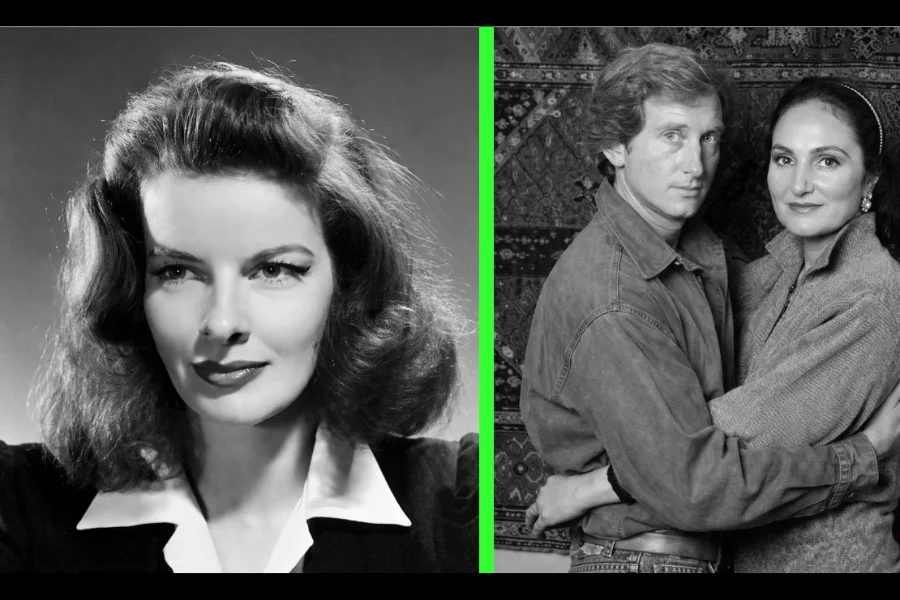
Let’s start with the honest truth. Most people who look up Ludlow Ogden Smith do so because they want to know more about Katharine Hepburn. He was her husband. That much everyone knows. And in the decades since Hepburn became one of the most celebrated actresses in Hollywood history, Ludlow has been reduced to a footnote. A name in parentheses. A stepping stone in someone else’s story.
That is deeply unfair.
Because Ludlow Ogden Smith was not a footnote. He was a man of genuine substance. He served his country as a Navy sailor. He built a company from the ground up. He created a financial concept sophisticated enough to foreshadow the computerized banking systems that would arrive decades later. He bankrolled the Broadway production that essentially rescued Katharine Hepburn from professional ruin — not as her husband, but as her devoted friend, years after the divorce.
And when she was elderly, he apparently called her from a hospital bed to tell her they were celebrating their fiftieth anniversary. Not legally. Not officially. But in his heart.
This is the story of Ludlow Ogden Smith. The full one. Not the footnote.
Quick Facts Table
| Detail | Information |
|---|---|
| Full Name | Ludlow Ogden Smith |
| Also Known As | “Luddy”; later used the name S. Ogden Ludlow / Ogden Ludlow |
| Date of Birth | February 6, 1899 |
| Place of Birth | Philadelphia, Pennsylvania, USA |
| Date of Death | July 7, 1979 |
| Place of Death | New Canaan, Connecticut, USA |
| Burial | Wayne, Pennsylvania |
| Parents | Lewis Lawrence Smith (1864–1950); Gertrude Gouverneur Clemson Smith (1872–1947) |
| Siblings | Lewis Gouverneur Smith (b. 1897); others |
| Education | Yale University |
| Military Service | U.S. Navy, 1918–January 1920 |
| Career | Businessman; President of Ogden Ludlow Inc.; financial systems innovator |
| Known For | Creating the “Ludlow Formula”; marriage to Katharine Hepburn |
| First Marriage | Katharine Hepburn (December 12, 1928 – May 8, 1934) |
| Second Marriage | Elisabeth Katharine Albers (September 26, 1942) |
| Children | Lewis Gouverneur Ludlow; Katharine Ramsey Ludlow (with Elisabeth Albers) |
| Estimated Net Worth | Wealthy by inheritance and business; specific figure not publicly recorded |
Born Into Philadelphia Society: A World of Weight and Expectation
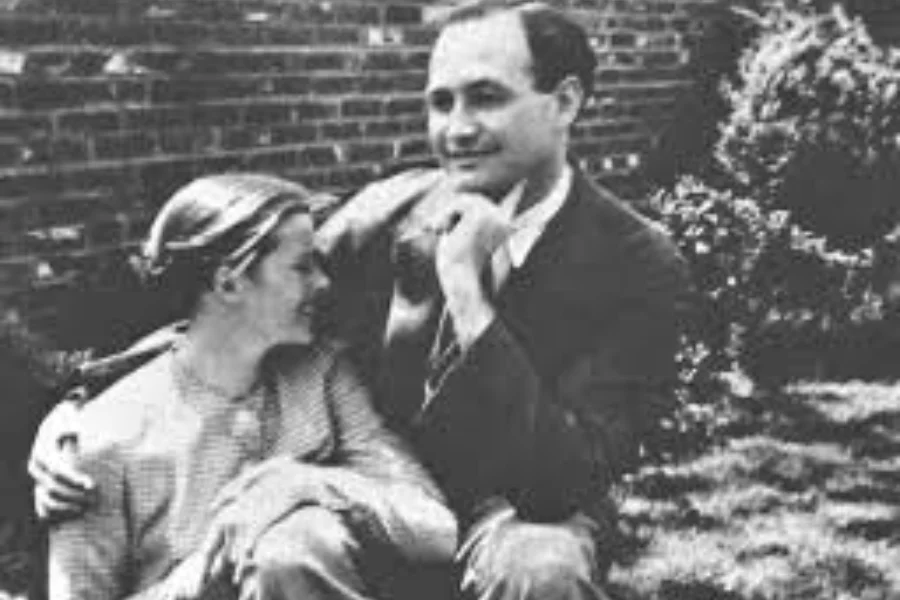
Philadelphia in 1899 was a city of old money, old names, and older rules. It was the kind of place where your family’s standing in the Social Register was as important as your bank account, and where certain surnames opened certain doors automatically.
Ludlow Ogden Smith was born into that world on February 6, 1899. His family was well-established in Philadelphia’s social hierarchy. His father, Lewis Lawrence Smith, and his mother, Gertrude Gouverneur Clemson Smith, were not anonymous figures. His mother’s name alone carried civic weight — she was active in women’s suffrage circles, and the family had roots in civic leadership and community responsibility that ran deep.
Ludlow was not the eldest. His brother Lewis Gouverneur Smith was two years older, and there were other siblings in the household. Growing up in a family like this came with real expectations. Not just expectations of wealth or manners, but expectations of contribution. The Smiths were the kind of family that gave back — to their community, to their country, to their social circle.
That sense of obligation would follow Ludlow his entire life. Sometimes it was professional. Sometimes it was personal. But it was always there.
The house he grew up in was the Georgian estate at Collen Brook in Wayne, Pennsylvania. Many years after Ludlow’s death, the family would convert that same house into the Smith-Lewis Local History Museum, a detail that says everything about how seriously this family took its place in history.
Education: Yale and the Making of a Gentleman
Ludlow attended Yale University, one of the most prestigious institutions in America and the natural educational destination for young men of his background and era.
Yale in the early twentieth century was less about specialization and more about formation. You went there to become a certain kind of person — one who understood history, commerce, culture, and how to carry himself in rooms where decisions got made. Ludlow absorbed all of it.
What precise course of study he pursued at Yale is not detailed in the historical record. But what Yale gave him was evident in how he conducted his life afterward: with restraint, with intelligence, and with the confidence of someone who never needed to prove himself loudly because the work would do it for him.
He graduated and returned to a world that was shifting dramatically. The old Philadelphia society he had grown up in was still there, but it was bumping up against a new century’s energies — jazz, automobiles, shifting gender roles, and a financial world growing more complex by the year.
The Navy: War, Discipline, and a Wider World
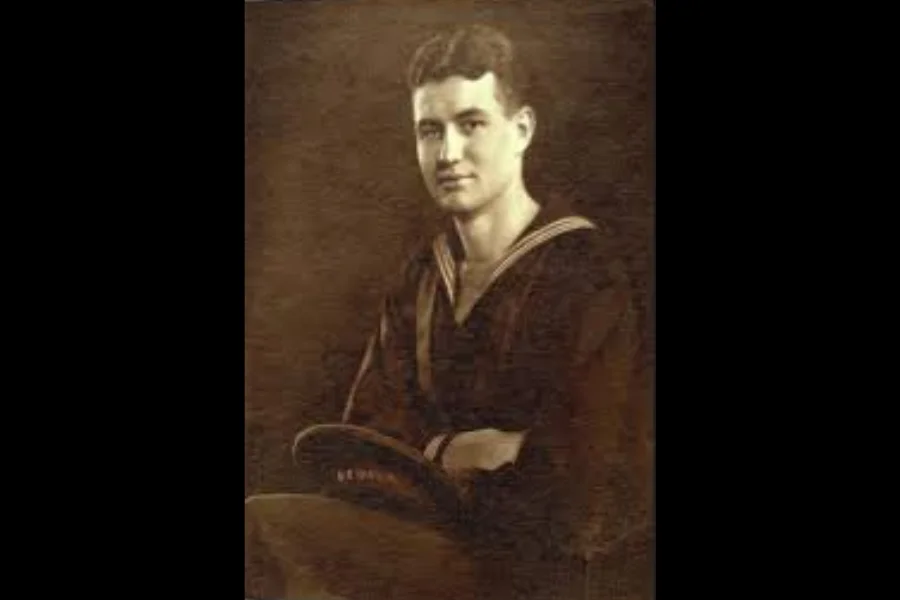
Before Ludlow built a career or fell in love, the world called him into service.
He joined the United States Navy in 1918, as World War I was drawing to its final, bloody close. He remained in uniform through January 1920. That is roughly two years of military life — not long by some standards, but formative by any.
Military service does particular things to a young man from a privileged background. It strips away the assumptions that come with family wealth. It places you alongside people who grew up nothing like you. It teaches you what structure actually feels like from the inside. And for someone like Ludlow — disciplined, methodical, curious — it likely reinforced habits of thought that would later serve him in business.
When he returned to civilian life in 1920, he was twenty-one years old. He had served his country. He had seen something beyond the parlors of Philadelphia. He was ready to build something.
Career: Finance, Systems, and the Ludlow Formula
Here is where Ludlow Ogden Smith’s story gets genuinely interesting — and genuinely underappreciated.
After his military service, Ludlow moved into the world of finance and business. His early professional life included working as a financial and industrial counsel for the John R. Hall Corporation. This was serious commercial work — advising companies on structure, capital, and operations. He was not a dilettante playing at business between social engagements. He was building expertise.
At some point during the early years of his marriage, Ludlow and Katharine set up their first home together in a small apartment on Manhattan’s east side. He went to work every day. She went to theatrical agents’ offices. Both of them were building something, each in their own way.
After the marriage ended and Ludlow had more fully taken the name Ogden Ludlow for public use, he went on to found his own firm. He called it Ogden Ludlow Inc., and it became a company with a genuinely specialized and valuable purpose: it was an authority on savings bank systems.
Think about what that means for a moment. In the mid-twentieth century, savings banks were how ordinary Americans managed money. The systems governing interest calculations, account management, and financial projections were largely manual — and deeply inconsistent. Ludlow devoted his professional energy to making those systems better.
The result of that work was what became known as the Ludlow Formula. This was a methodology for standardizing calculations in banking workflows. It brought predictability and precision to processes that had previously relied on varying local approaches. And here is the remarkable part: the Ludlow Formula was a precursor to what would eventually become computerized financial systems. Decades before anyone was programming mainframes to handle banking data, Ludlow was laying the conceptual groundwork for that kind of systematic financial thinking.
He served as president of Ogden Ludlow Inc. for many years. He also worked at one point as a civilian employee at the U.S. Navy Department — a connection to his military past that suggests his government service had opened professional doors alongside its personal ones.
Ludlow was not a flashy businessman. He did not seek press coverage or celebrity. He built something real and useful, and he ran it with the same quiet competence he brought to every other corner of his life.
Katharine Hepburn: A Meeting That Changed Everything
In the late 1920s, Katharine Hepburn was finishing her final year at Bryn Mawr College in Pennsylvania. She was sharp, unconventional, and already burning with ambition. She was not looking for a husband. But life rarely asks what you are looking for.
Ludlow and Katharine were introduced through a mutual friend who happened to live near the Bryn Mawr campus. There was an immediate connection. She was twenty-one, crackling with energy and opinions. He was twenty-nine, steady and warm and genuinely kind.
He was also, by all accounts, immediately and completely in love with her.
They began seeing each other. The relationship deepened. And on December 12, 1928, just months after Katharine’s graduation, they were married at the Hepburn family home in Hartford, Connecticut. His mother called it “a perfect match.”
From the beginning, though, the match had an unusual shape. Katharine was not interested in being a conventional wife. She wanted to act. She wanted to work. She wanted the theater and eventually Hollywood, not a domestic routine.
Ludlow accepted this. More than accepted it — he supported it. He understood what she was, what she needed, and what her ambitions required. That kind of understanding, at that time, in a man of his social background, was actually remarkable.
The Name Change: “Luddy” Becomes Ogden
Here is a detail that reveals the texture of their relationship better than most things.
When Katharine began pursuing her acting career in earnest, she ran into a problem. Her name was Kate Hepburn. But after their marriage, her legal name was Kate Smith. And at that moment in American popular culture, there was a famous, enormously popular singer named Kate Smith, known for her booming voice and patriotic performances.
The idea of young actress Kate Smith — same name, completely different person — was professionally awkward at best and potentially career-derailing at worst.
So Katharine asked Ludlow to change his name. And he did.
He switched from Ludlow Ogden Smith to S. Ogden Ludlow — essentially reversing the order of his names. It was a generous, unselfish act. Giving up your surname is not a small thing, particularly for a man from a family as socially prominent as the Smiths of Philadelphia. It meant reshuffling his identity on paper so that his wife’s career would not be confused with someone else’s.
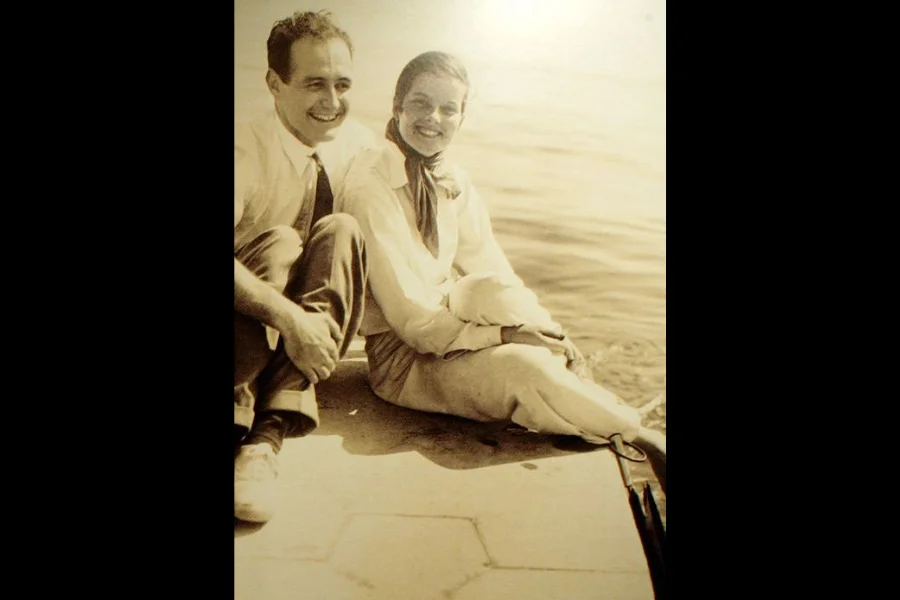
Some accounts suggest the name change was entirely his own idea, done to protect her professional brand. Others say she asked directly. The truth is probably somewhere in between — a conversation between two people who trusted each other and arrived at a practical solution together.
What matters is that he did it willingly. And notably, even after the marriage ended, he continued using the name Ogden Ludlow for the rest of his life.
The Marriage Strains: Hollywood and the Distance It Creates
The first few years of their marriage were genuinely happy. They lived modestly in New York. He worked. She auditioned. They were a team in the unconventional sense — two people with separate pursuits who came home to each other in the evening.
But in 1932, Katharine got her big break. She was cast in films. Hollywood called. And Hollywood, once it has someone in its grip, does not share.
She moved to California. The distance between New York and Los Angeles in the early 1930s was not just geographical — it was cultural, social, and temporal. Careers were made on the West Coast. Relationships required presence. And Katharine Hepburn’s presence was increasingly consumed by the machinery of the studio system.
The couple began to drift. Not through conflict or bitterness, but through the simple physics of two people pointed in different directions. By 1934, six years after their wedding, the marriage was effectively over.
Katharine filed for divorce in Mexico — specifically in Yucatán — in late April 1934. The divorce was finalized on May 8 of that year. The speed and informality of Mexican divorces made them common among Americans of that period who wanted a quick legal resolution without the complications of home-state procedures.
The Painful Aftermath: Expelled from the Social Register
Here is a part of the story that often goes untold.
After the divorce was finalized, Ludlow was removed from the Philadelphia Social Register.
The Social Register was the official directory of the American social elite — particularly in cities like Philadelphia, Boston, and New York. Being listed there was a marker of status. Being removed was a public humiliation. It signaled that the community of your birth had decided you were no longer among their own.
Ludlow had done nothing wrong. He had been a devoted husband. He had supported his wife’s career at the expense of his own public identity. He had agreed to a divorce when she asked for one. And yet the social machinery of Philadelphia — run by people who valued convention and appearances above almost everything else — punished him for it.
It is one of the crueler details in this story. And it likely contributed to his decision to fully embrace the Ogden Ludlow identity, building a new professional reputation under a name that carried no connection to the Philadelphia society that had rejected him.
The Greatest Gesture: Financing The Philadelphia Story
Time moved on. Katharine became one of Hollywood’s biggest stars. Then, by the late 1930s, her star dimmed. The studios had labeled her “box office poison” — a devastating industry verdict that effectively ended many careers.
Katharine was facing the prospect of professional irrelevance at thirty-one years old.
Then an idea emerged. A playwright named Philip Barry was working on a new stage play. It was called The Philadelphia Story. It was written specifically with Katharine in mind, as a vehicle designed to remind audiences what she was capable of. The plan was to open it on Broadway in 1939.
There was just one problem. Stage productions cost money.
Ludlow Ogden Smith — the man she had divorced five years earlier, the man who had given up his surname for her, the man who had watched her career explode and then falter from a respectful distance — stepped in. He helped finance the Broadway production.
Let that settle for a moment. This was not a man still carrying a torch in a destructive way. This was a man who genuinely cared about another person’s wellbeing and potential, and who put his own money behind that belief even when he had no personal stake in the outcome.
The Philadelphia Story opened in March 1939 and ran for more than four hundred performances. It was a triumph. It became a film the following year, starring Katharine alongside Cary Grant and James Stewart, and the film is now considered a classic of Hollywood’s golden age. The role of Tracy Lord — the imperious, complicated socialite at the play’s center — revived Katharine Hepburn’s career completely.
Ludlow got none of the credit. Publicly, almost no one knew about his contribution for years. That was exactly how he wanted it.
Second Marriage: Elisabeth Albers and a Quieter Life
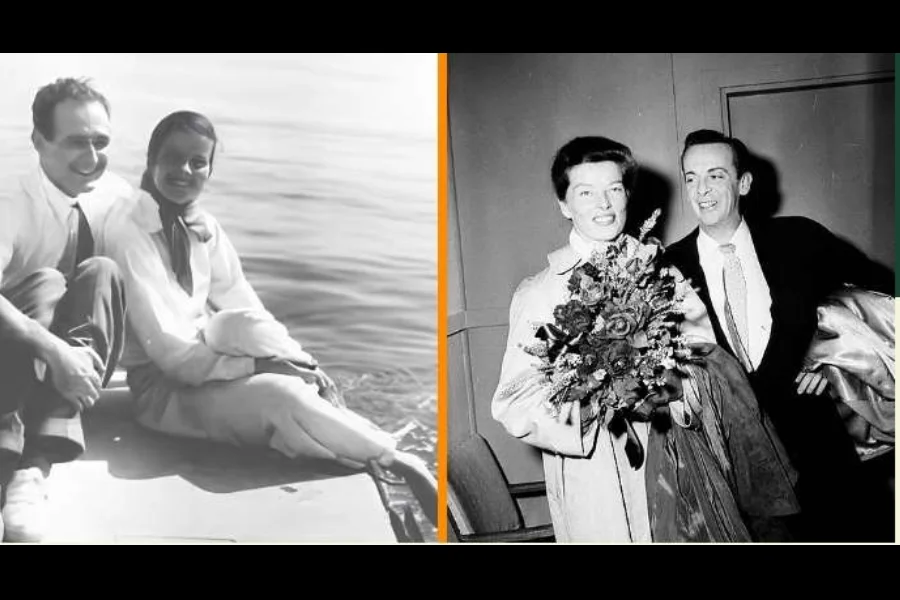
There was one lingering legal complication after the Mexican divorce. Ludlow was uncertain whether it would hold up under American law. This was a real concern for anyone who wanted to remarry in the United States without the risk of a bigamy accusation.
So in September 1941, he secured a formal divorce through the courts in Connecticut, ensuring the legal record was absolutely clean.
The following year, on September 26, 1942, Ludlow married Elisabeth Katharine Albers at All Souls Unitarian Church in Alexandria, Virginia. Elisabeth was a Boston socialite. The ceremony was quiet and dignified. There were no Hollywood cameras and no public drama.
Together, Ludlow and Elisabeth built the kind of life that had always suited him better than the celebrity-adjacent world he had briefly occupied. They had two children. A son they named Lewis Gouverneur Ludlow, carrying the family name forward. And a daughter they named Katharine Ramsey Ludlow.
The daughter’s name is not coincidental. Naming your child after your ex-wife is an unusual choice for most people. For Ludlow Ogden Smith, it appears to have been a gesture of enduring affection — not romance, not longing, but genuine love for a person who had mattered enormously to him.
A Friendship That Outlasted Everything
After Elisabeth passed away, and after Spencer Tracy — the great love of Katharine Hepburn’s later life — died in 1967, something happened between Ludlow and Katharine that is quietly extraordinary.
They grew close again.
They resumed the deep friendship that had always run beneath the surface of their relationship, even during the divorce years and through the decades of separate lives. They talked. They stayed in contact. Katharine began visiting Ludlow regularly at his Connecticut home.
When Ludlow became ill with cancer toward the end of his life, Katharine made a standing arrangement. Every weekend, on her way to her family property at Fenwick, Connecticut, she would stop and visit him. Then she would stop again on the way back. She kept visiting when he was moved into hospital care. She was there. Consistently, faithfully, quietly there.
One day, near the end, Ludlow called her mother from his hospital bed. “Kate and I are celebrating our fiftieth wedding anniversary,” he told her.
They were not, technically. The legal marriage had ended in 1934. But counted from December 12, 1928, fifty years later would place them in 1978 — the year before Ludlow died. He was not confused. He was expressing something true. That their bond had never really ended. That what they had built together in those early years was still real to him.
He died on July 7, 1979, in New Canaan, Connecticut. He was eighty years old. He is buried in Wayne, Pennsylvania — close to the family estate at Collen Brook where he had grown up.
Money and Legacy: What He Left Behind
Ludlow Ogden Smith was never a poor man. He was born into a wealthy family and he built further wealth through his own business acumen over decades.
The specific figures from his estate are not in the public record. He was not a celebrity. He never gave interviews about his finances. But the shape of his life — Yale education, his own company, investment in a Broadway production, a home in New Canaan, Connecticut (one of America’s most expensive residential communities) — indicates sustained, significant wealth over his lifetime.
His most lasting financial contribution was conceptual rather than monetary: the Ludlow Formula. By standardizing the way savings banks calculated and managed financial data, he made the banking system marginally more efficient for millions of ordinary Americans who never knew his name. That is a particular kind of legacy. Invisible but real.
In 1991, more than a decade after his death, his family transformed the Georgian house at Collen Brook into the Smith-Lewis Local History Museum. Katharine Hepburn, then elderly and frail, lent her name and prestige to the project. She showed up for a man who had been gone for twelve years. That says everything about how much his memory meant to her.
What His Story Means
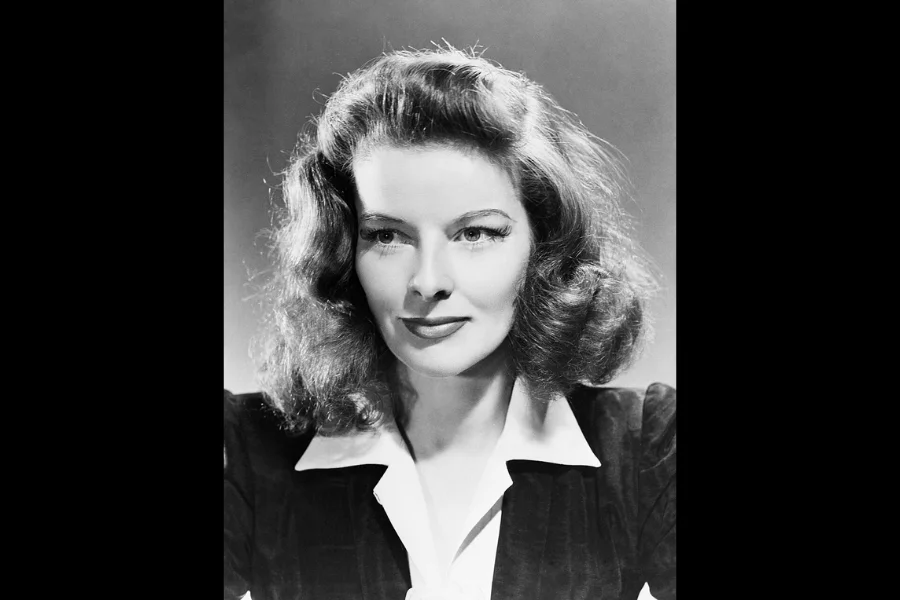
Ludlow Ogden Smith lived eighty years. He served his country as a sailor. He built a career that produced a genuine innovation in financial systems. He loved a woman deeply enough to change his own name and support her career even after their marriage ended. He raised two children. He found happiness in a second marriage. He never sought fame, never chased headlines, and never told his own story publicly.
In an era now saturated with personal branding and relentless self-promotion, Ludlow Ogden Smith represents something that has become genuinely rare: a person who measured the worth of his life in what he did rather than in how many people knew about it.
Katharine Hepburn called herself a “terrible pig” in her memoir for having taken advantage of his love and support during her early career years. She was honest enough to see it. But the phrase undersells what Ludlow actually was. He was not someone who was used. He was someone who chose, repeatedly and deliberately, to give. There is a difference.
He gave his name. He gave his money. He gave his time. He gave his friendship. And long after he was gone, the people who knew him best spoke about him with the kind of warmth that cannot be faked.
That is the full story of Ludlow Ogden Smith. Not the footnote. The whole man.
Read More: Michael Galeotti
FAQs
1. Who was Ludlow Ogden Smith?
He was a Philadelphia businessman, Yale graduate, U.S. Navy veteran, and banking systems innovator who lived from 1899 to 1979. He is most widely remembered as the first and only legal husband of actress Katharine Hepburn, though his professional achievements stand on their own.
2. When and where was Ludlow Ogden Smith born?
He was born on February 6, 1899, in Philadelphia, Pennsylvania, to a well-established Philadelphia family with deep civic roots.
3. Why did Ludlow change his name?
During his marriage to Katharine Hepburn, he adopted the name S. Ogden Ludlow to prevent confusion between her professional name and the famous singer Kate Smith, who was enormously popular at the time. Some accounts say this was Katharine’s request; others suggest it was his own practical decision. Either way, he kept the new name for the rest of his life.
4. What was the Ludlow Formula?
It was a financial methodology Ludlow developed through his company, Ogden Ludlow Inc., that standardized calculations in savings bank operations. It is considered a conceptual forerunner to the computerized banking systems that arrived in later decades.
5. How did Ludlow and Katharine Hepburn meet?
They were introduced through a mutual friend who lived near the Bryn Mawr College campus while Katharine was finishing her studies there. They married in December 1928, roughly six months after her graduation.
6. Why did their marriage end?
The marriage ended primarily because of distance and diverging paths. When Katharine moved to Hollywood in 1932 to pursue film acting, the separation proved too great. They divorced in Mexico in May 1934. There does not appear to have been bitterness or a dramatic falling out — they simply grew apart.
7. Did Ludlow and Katharine Hepburn have children together?
No. They discussed the possibility of children but Katharine’s career commitments took priority. Ludlow later had two children — a son and a daughter — with his second wife, Elisabeth Albers.
8. What happened to Ludlow after the divorce?
He was removed from the Philadelphia Social Register, which was a significant social sanction at the time. He then rebuilt his professional life under the name Ogden Ludlow, founded his own company, married again in 1942, raised two children, and continued his work in financial systems until later in life.
9. Is it true Ludlow helped fund The Philadelphia Story?
Yes. In 1939, years after their divorce, Ludlow contributed financially to the Broadway production of The Philadelphia Story, which was designed to revive Katharine Hepburn’s then-struggling career. The play was a massive success and eventually became the celebrated 1940 film.
10. Did Ludlow and Katharine stay in contact after the divorce?
Yes, consistently and for decades. After both of their spouses had died — Spencer Tracy in 1967, and Elisabeth Albers at some point thereafter — the two grew particularly close again. Katharine visited Ludlow every weekend when he was ill with cancer, stopping at his Connecticut home on the way to and from her family property at Fenwick.
11. What was Ludlow’s family background?
His mother, Gertrude Gouverneur Clemson Smith, was a significant figure in women’s suffrage in Pennsylvania. His family ran the Georgian estate at Collen Brook in Wayne, Pennsylvania, which was later converted into the Smith-Lewis Local History Museum in 1991. Katharine Hepburn, elderly by then, attended to lend her support to the project.
12. When and where did Ludlow Ogden Smith die?
He died on July 7, 1979, in New Canaan, Connecticut, at the age of eighty. He is buried in Wayne, Pennsylvania, near the family estate where he was raised.
Also read: Jesus Lechuga