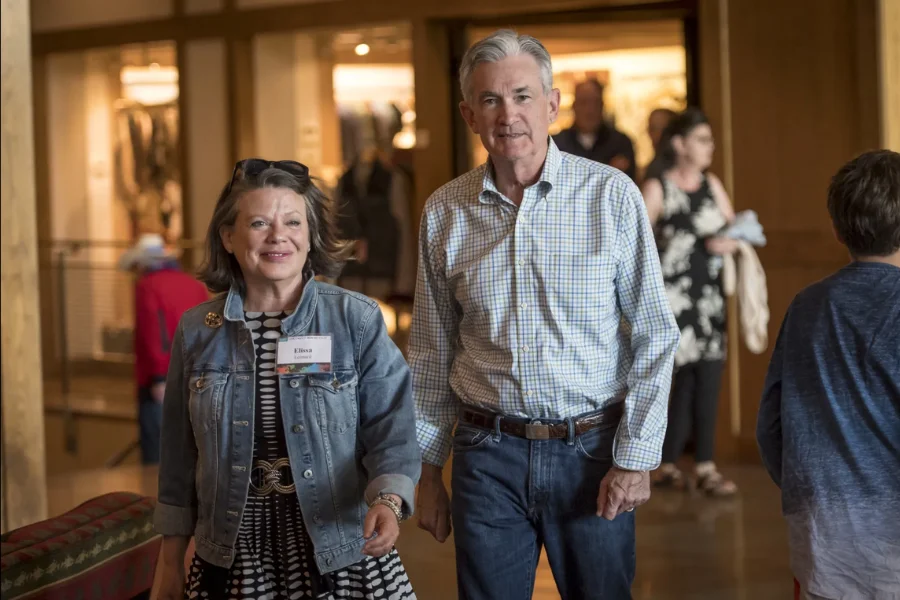
There is a certain kind of person who quietly accumulates achievements without ever demanding that anyone notice. Elissa Leonard is that kind of person.
You might have heard her name mentioned alongside Jerome Powell, the Chair of the United States Federal Reserve — one of the most consequential financial positions anywhere in the world. And yes, she is his wife. But that single fact tells almost nothing about who she actually is.
Before the Fed headlines. Before the Washington power circles. Before any of that — Elissa Leonard was already a Harvard-educated filmmaker winning Emmy Awards and directing stories that mattered to her. She was already building something real.
This is the story of that something real.
Quick Facts
| Detail | Information |
|---|---|
| Full Name | Elissa Ann Leonard |
| Date of Birth | May 20, 1957 |
| Birthplace | Rockville, Maryland, USA |
| Zodiac Sign | Gemini |
| Nationality | American |
| Education | Harvard College (graduated magna cum laude, 1979) |
| Fields | Filmmaking, Television Production, Writing, Civic Leadership |
| Notable Works | Sally Pacholok (2015), Ladies in Black (2018), Innovation TV series |
| Awards | Two New York Emmy Awards; 11 TIVA Peer Awards including Silver for Directing |
| Spouse | Jerome Powell (married September 14, 1985) |
| Children | Three (Sam, Lucy, and Susie Powell) |
| Residence | Chevy Chase Village, Maryland |
| Estimated Net Worth | Personal net worth private; combined household estimated at $50–$55 million |
Growing Up in Rockville: A Maryland Childhood
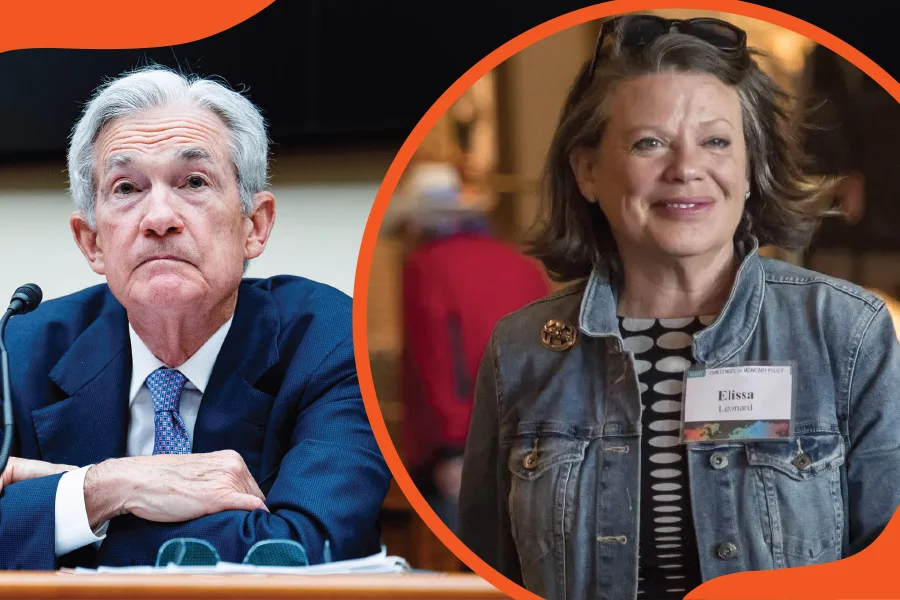
Elissa Ann Leonard came into the world on May 20, 1957, in Rockville, Maryland. It is a city just outside Washington D.C. — close enough to absorb the intellectual energy of the capital, quiet enough to raise a family away from it.
Her parents were George Hill Leonard and Phyllis Leonard (née Bachner). Her father had a serious and purposeful career: he worked as a heart disease control administrator for the U.S. Public Health Service in Washington D.C. That kind of background — science, public health, federal service — shapes a household in particular ways. There is attention to evidence. There is a sense of duty. There is the understanding that your work should mean something beyond a paycheck.
Elissa grew up alongside two brothers, Jeffrey and Jonathan.
Details about her early childhood are deliberately kept private, which fits everything else we know about her. But the pattern is clear. A Maryland girl raised by a public servant father. A home where education was not optional. A city that placed government, policy, and civic responsibility at the center of everyday life.
She attended Montgomery County Public Schools. It is the same school system that has quietly produced a remarkable number of accomplished Americans over the decades. For Elissa, it was the runway before Harvard.
Harvard: Where Curiosity Became Craft
This is the part of Elissa Leonard’s story that changes how you see everything else.
She enrolled at Harvard College and graduated in 1979, magna cum laude. That distinction — graduating with great praise — places her in the top tier of an already extraordinarily competitive institution. She did not just pass through Harvard. She excelled there.
Her degree was a joint major in Visual and Environmental Studies and Government. Stop and think about that combination for a moment. One half of the degree is about how we see the world — visual culture, design, the environment we build and inhabit. The other half is about how we organize and govern it. Together, they describe someone who wants to understand power and beauty simultaneously. Someone interested in both what a story looks like and what it means.
That double vision — aesthetic and political, personal and structural — runs through everything she would later create.
Harvard also turned out to be where she developed the tools that her career would run on: disciplined research, critical storytelling, and the patience to pursue something long enough to get it right.
Shortly after graduating, she held a Q&A session back on campus about her film work — a sign that even early in her career, Harvard considered her path worth discussing with students.
The Television Years: Building a Career Frame by Frame
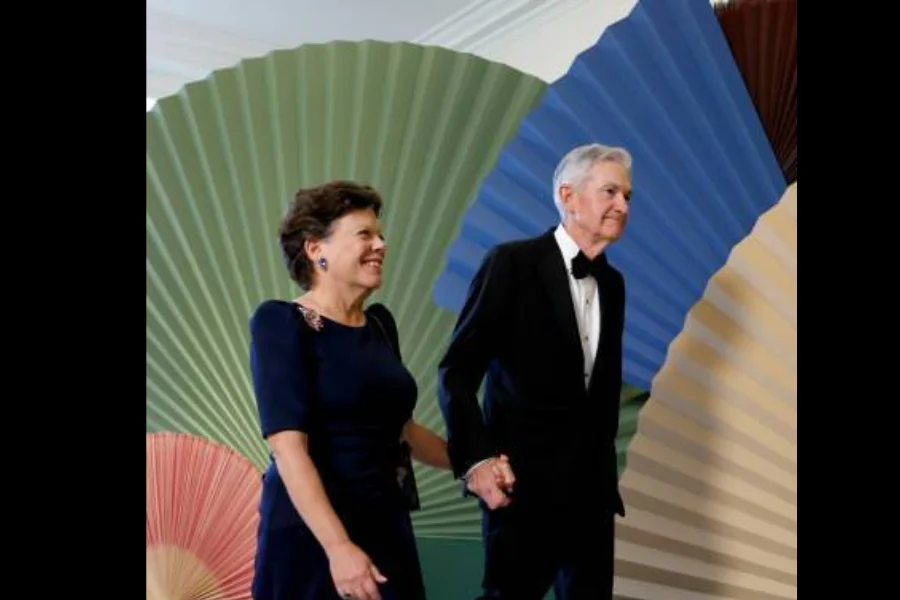
Elissa did not walk out of Harvard and straight into feature films. She built her career the way most serious professionals do — through years of grinding, learning, and earning trust one project at a time.
Her first television home was WNET-TV, Channel 13 in New York. WNET is public broadcasting royalty — one of the great institutions in American educational and documentary television. There, she worked as a producer and writer on a weekly science series called Innovation. The show tackled scientific and technological developments for a general audience. It required exactly the kind of dual fluency she had trained for: intellectual rigor translated into compelling screen storytelling.
Innovation brought her the first real recognition of her career. She won two New York Emmy Awards for her work on the series. These are not ceremonial trophies handed out for participation. The New York Emmy Awards are given by the National Academy of Television Arts and Sciences, and winning two of them — particularly at that stage of a career — signals genuine craft.
From WNET, she moved to a role as Senior Story Editor at National Geographic Television’s Explorer series. This was a step up in prestige and scope. Explorer was one of the most respected documentary franchises in the world, taking viewers to remote corners of the planet and into some of the century’s most significant stories. Being trusted as a Senior Story Editor meant shaping not just individual episodes but the editorial direction of multiple productions.
She also worked as a producer at The Educational Film Center on two series — Powerhouse and Give and Take. These were productions aimed at younger or less-privileged audiences, the kind of work that serves communities rather than chases ratings.
By the time Elissa Leonard stepped away from television toward independent film, she had spent years inside some of the most respected production environments in American non-commercial broadcasting. She knew exactly what good documentary storytelling required.
Sally Pacholok: The Film She Had to Make
Every filmmaker has a project that defines them. For Elissa Leonard, that project was Sally Pacholok.
The story began with a real person. Sally Pacholok was an emergency room nurse who spent years noticing something that the wider medical community was ignoring: patients were being systemically misdiagnosed for Vitamin B12 deficiency. This deficiency, when untreated, causes serious neurological damage. Pacholok documented it, pushed back against hospital administrators, and fought the medical establishment to get it recognized.
It is exactly the kind of story that Elissa — shaped by a father in public health and a career in documentary television — would find irresistible.
She co-wrote the screenplay. She directed the film. She produced it. And she brought in actress Annet Mahendru to play Sally Pacholok. The film was released in 2015.
The results were striking. Sally Pacholok earned an 8.4 rating on IMDb. At the Television, Internet and Video Association of Washington D.C.’s Peer Awards — known as the TIVA Peer Awards — it won 11 awards total. Elissa personally took home Silver Awards for both independent feature and directing. She also collected the Best Feature award at the Washington D.C. Independent Film Festival.
That is not a modest haul. That is a filmmaker delivering real work and being recognized for it.
Ladies in Black: Going International
After Sally Pacholok, Elissa turned her attention to a very different kind of story. Australian director Bruce Beresford — the man behind films like Driving Miss Daisy — was making a film adaptation of Madeleine St. John’s beloved novel The Women in Black, retitled Ladies in Black for the screen.
The novel is a warmly funny story set in a Sydney department store in the late 1950s, tracking the lives and ambitions of the women who work there. It is a comedy about aspiration, migration, friendship, and quiet lives lived with dignity.
Elissa came aboard as executive producer. The film starred Julia Ormond and was released in 2018. Working with a director of Beresford’s caliber, on an international production, on material that required a completely different sensibility from Sally Pacholok — it showed range.
Not every filmmaker can move from serious medical advocacy drama to gentle period comedy and do both with conviction. The fact that she could says something about the breadth of her creative interests.
Meeting Jerome Powell: A Story About the Right Moment
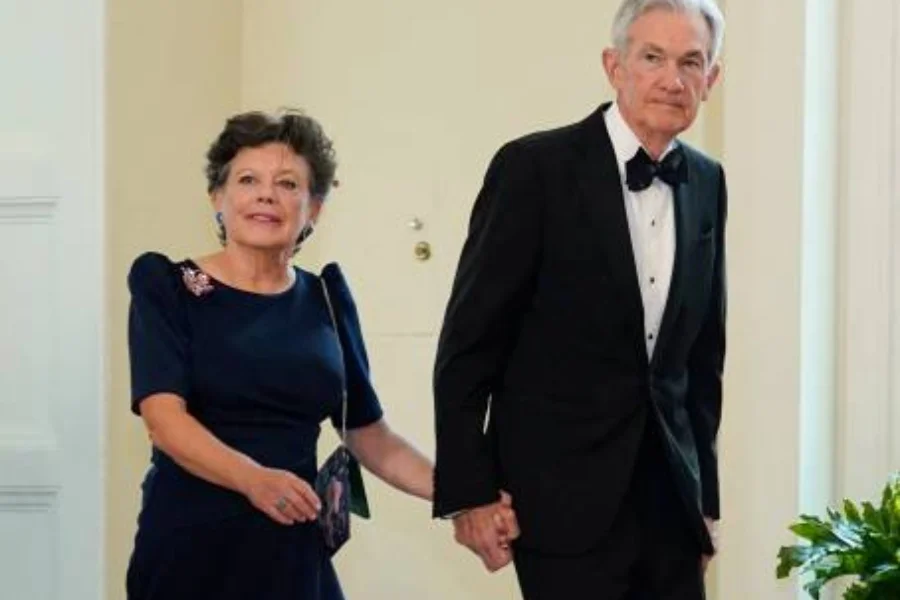
Elissa Leonard met Jerome Powell in the early 1980s. The introduction came through an unexpected but very human route: Powell’s sister was Elissa’s housemate.
That is how a lot of genuinely good relationships begin. Not through networking events or formal introductions, but through proximity and shared space and someone’s sister who happened to live with someone else.
Jerome Powell at that point was a lawyer working in investment banking. He had graduated from Princeton and then Georgetown Law. He was clearly capable and driven. But he was not yet the Jerome Powell — not yet the Federal Reserve chairman whose every press conference moves global markets.
They dated. The relationship grew. On September 14, 1985, they married at the Bethlehem Chapel of Washington National Cathedral. It was a meaningful setting — one of the most architecturally significant churches in America, nestled in the hills of Northwest Washington D.C. The ceremony was personal and grounded.
They have been married for over four decades.
Family Life: Three Children, One Deliberately Quiet Home
Elissa and Jerome Powell have three children: Sam, Lucy, and Susie Powell.
Almost nothing about those three individuals is in the public domain. Their names appear occasionally in profiles of Jerome Powell, but their lives, careers, and personalities have been kept firmly private.
This is not an accident. It is a choice. And it is almost entirely Elissa’s.
The pattern of her life — from her preference for meaningful projects over flashy ones, from her civic work in a Maryland village rather than Washington’s power circuit — points to someone who has always valued depth over visibility. That same principle was applied to how she raised her children. Famous last name, normal life.
What is documented: the family lives in Chevy Chase Village, Maryland. It is an enclave of around 2,000 people just outside D.C. — small, well-maintained, and deeply community-oriented. It is exactly the kind of place where someone like Elissa would thrive, and exactly the kind of place where a Federal Reserve chairman can actually live rather than perform.
Civic Work: The Less Glamorous, More Real Kind of Leadership
Here is something that tends to get lost in profiles built around Jerome Powell’s career: Elissa Leonard’s civic involvement is both serious and substantive.
She served as Chair of the Board of Managers of Chevy Chase Village. Before that, she chaired the Buildings Facilities Commission. She has served on the Tree Committee, the Parks Committee, and the Environment and Energy Committee.
Read those again. These are not figurehead positions. These are working roles in local government — the kind that require showing up to meetings, reading documents, making decisions that affect real neighbors on real streets. There is no celebrity in chairing a facilities commission. There is only responsibility.
She is also a member of the Board of Trustees of Levine Music, one of the Washington region’s most respected community music organizations. And she sits on the Board of Directors of the Chevy Chase Historical Society.
Additionally, she has been listed as a trustee at the Washington Drama Society.
None of these roles come with press coverage or Instagram moments. They come with work. The fact that she has accumulated this many of them, consistently, over many years, while also pursuing a filmmaking career, suggests someone with a genuinely high tolerance for doing things that matter without an audience.
Hard Times: Privacy as Protection

It would be dishonest to write about Elissa Leonard without acknowledging the particular pressures that come with being married to one of the most watched people in American financial life.
When Jerome Powell was nominated as Federal Reserve Chair by President Donald Trump in November 2017, and confirmed in February 2018, the family entered a new level of scrutiny. Suddenly, Elissa’s name appeared in countless articles. Her biography was parsed. Her filmmaking career was described in compressed, often inaccurate summaries. Her children’s names were looked up.
She handled it the way she handles everything: by not reacting publicly.
There is also the structural difficulty of a life shaped largely around a spouse’s career. Jerome Powell’s path took him from law to investment banking to the Treasury Department to the Federal Reserve Board and eventually to its chairmanship. Each transition brought new demands, new locations of influence, new public attention. Throughout all of it, Elissa maintained her own work, her own community commitments, and her own creative projects.
That takes a kind of internal steadiness that does not get talked about enough. It is not passive support. It is active maintenance of a separate self.
Money: What the Numbers Actually Say
Elissa Leonard has never made a public statement about her personal finances. Her net worth as an individual is not confirmed by any verified source.
What is documented is her household. Jerome Powell, as the Fed chair, is required to make financial disclosures. Those disclosures have placed the couple’s combined net worth somewhere between approximately $20 million on the conservative end and $55 million at the upper estimate. Powell is listed among the wealthiest members of the Federal Reserve Board of Governors, with wealth accumulated during his years in investment banking and private equity before he moved into public service.
The family’s lifestyle fits the picture: a home in one of suburban Maryland’s most desirable communities, children put through good schools, civic involvement across multiple organizations that implies financial stability if not excess.
For her own part, Elissa has earned money through television production, film production and directing, and executive producing work. An Emmy-winning television producer with decades of credits does not work for free. But she has never sought to quantify it publicly, which is consistent with every other choice she makes about visibility.
What She Is Doing Now
As of 2026, Elissa Leonard continues to live in Chevy Chase Village with her husband, whose term as Federal Reserve Chair has shaped U.S. monetary policy through some genuinely turbulent economic years — including the inflation surge and interest rate cycle that dominated 2022 through 2024.
Her civic roles in Chevy Chase Village continue. Her interest in film and storytelling does not appear to have dimmed. The Ladies in Black executive producer credit from 2018 was her most recent major screen project on record, though given her pattern of working across long timelines on meaningful projects, it would be surprising if she were entirely finished with filmmaking.
She remains private on social media. She rarely gives interviews. She does not attend events to be seen. She attends them, when she attends them at all, because she cares about what is happening there.
In a Washington culture that has made performance into a profession, Elissa Leonard’s quiet consistency is, in its own way, remarkable.
Why Elissa Leonard’s Story Deserves Its Own Article
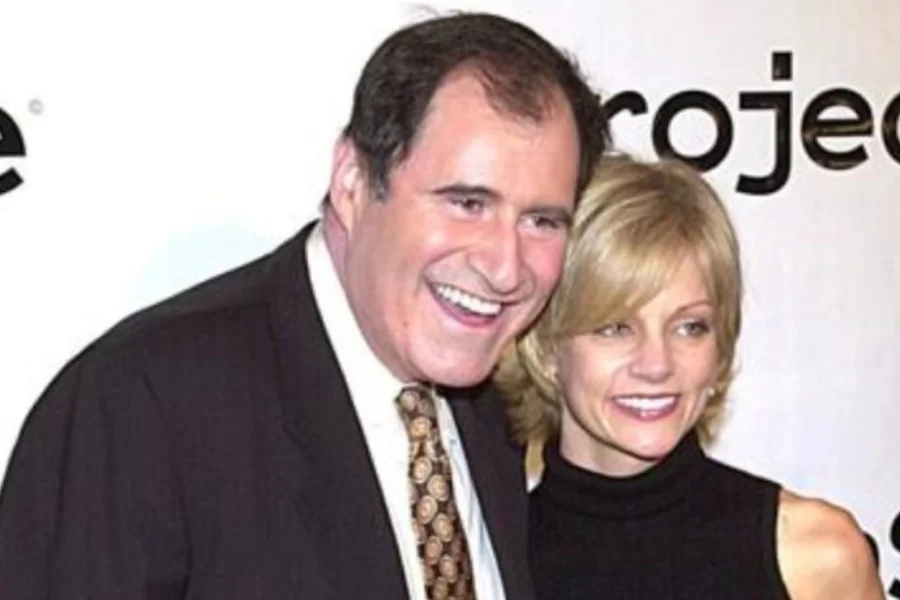
Here is what tends to happen with women in her position. They get a paragraph. Maybe two. In a longer article about their husband.
Elissa Leonard graduated magna cum laude from Harvard with a genuinely unusual double major. She built a television career at WNET and National Geographic that produced Emmy Awards. She spent over a decade developing a feature film about medical injustice, directed it herself, won 11 awards with it, and held a Q&A about it back at Harvard. She then moved into international production on a film with a serious Australian director. She runs community governance committees in her village. She serves on arts and music boards. She has three children whose lives she has protected from public exposure for their entire lives.
That is not a supporting role. That is a full life, built with intention and without noise.
The fact that she is also Jerome Powell’s wife is a fact. It is not the story.
Read More: Cynthia Blaise
FAQs
1. Who is Elissa Leonard?
She is an American filmmaker, television producer, writer, and civic leader. She is also the wife of Jerome Powell, Chair of the U.S. Federal Reserve, though she has a significant independent career that stands on its own.
2. When and where was Elissa Leonard born?
She was born on May 20, 1957, in Rockville, Maryland.
3. Where did Elissa Leonard go to college?
She attended Harvard College, graduating in 1979 magna cum laude with a joint major in Visual and Environmental Studies and Government.
4. What is Elissa Leonard’s most famous film?
Sally Pacholok (2015), which she wrote, directed, and produced. It earned 11 TIVA Peer Awards and the Best Feature prize at the Washington D.C. Independent Film Festival, and holds an 8.4 rating on IMDb.
5. What Emmy Awards did she win?
She won two New York Emmy Awards during her time as a producer and writer on the Innovation science series at WNET-TV Channel 13 in New York.
6. Who are Elissa Leonard’s parents?
Her father was George Hill Leonard, a heart disease control administrator for the U.S. Public Health Service. Her mother was Phyllis Leonard (née Bachner). She has two brothers, Jeffrey and Jonathan.
7. How did Elissa Leonard meet Jerome Powell?
They met in the early 1980s when Powell’s sister was living with Elissa as a housemate. They married on September 14, 1985, at the Bethlehem Chapel of Washington National Cathedral.
8. How many children do Elissa Leonard and Jerome Powell have?
Three children: Sam, Lucy, and Susie Powell. Their lives are kept almost entirely private.
9. What civic roles has Elissa Leonard held?
She has served as Chair of the Board of Managers of Chevy Chase Village, Chair of the Buildings Facilities Commission, and on the Tree, Parks, and Environment & Energy committees. She is also a trustee of Levine Music and sits on the board of the Chevy Chase Historical Society.
10. What is Elissa Leonard’s net worth?
Her individual net worth is not publicly disclosed. The combined household net worth of Elissa Leonard and Jerome Powell is estimated between $20 million and $55 million, with most of that wealth attributed to Powell’s years in private finance before entering public service.
11. What is Ladies in Black and what was her role?
Ladies in Black (2018) is a period comedy film directed by Bruce Beresford, adapted from the Australian novel The Women in Black by Madeleine St. John. Elissa served as executive producer on the project, which starred Julia Ormond.
12. What is Elissa Leonard doing now?
As of 2026, she continues to live in Chevy Chase Village, Maryland, maintains her civic roles in the community, and remains engaged with the arts through board memberships. Her filmmaking career, while lower in profile in recent years, reflects a consistent pattern of working on projects that take time and care rather than rushing toward output.
Also Read: Zoe Grace Quaid